
Disclosure: Some links in this article are affiliate or sponsored links. If you buy through them, we may earn a commission at no extra cost to you. Our opinions are our own.
Mobile gaming is no longer a niche pastime. With billions of players worldwide and in-app advertising becoming the dominant revenue model for free-to-play titles, choosing the right gaming ad network is one of the most consequential decisions a publisher can make. Whether you are an indie developer monetizing your first casual game or an established studio managing a portfolio of titles, the ad network you partner with directly shapes how much revenue you earn per user and how smoothly those earnings scale.
The options available today go well beyond simple banner placements. Modern gaming ad networks bring AI-powered targeting, rewarded video formats, real-time bidding, and rich analytics that help publishers squeeze maximum value from every ad impression. The challenge is that not every network fits every publisher, and picking the wrong one can mean lower eCPMs, poor fill rates, and frustrated players.
This guide covers the best gaming ad networks for publishers right now, with verified details pulled from each platform’s official pages so you can make an informed decision based on current, accurate information.
What Is a Gaming Ad Network?
A gaming ad network is a technology platform that sits between mobile game publishers and advertisers. Publishers make ad inventory available through the network, advertisers bid for placements within that inventory, and the network handles the targeting, delivery, optimization, and payment logistics in between.
For publishers, a gaming-specific ad network is particularly valuable because it understands the unique dynamics of in-app environments: how to serve ads during natural pauses in gameplay without breaking immersion, how to match ad formats to game genres, and how to target players based on their behavior and in-app spending patterns. A well-integrated gaming ad network can turn ad revenue into a meaningful income stream without the user experience trade-offs that poorly placed ads create.
Understanding the difference between ad formats is also important before choosing a network. Rewarded video ads, where players opt in to watch a short clip in exchange for in-game currency or extra lives, consistently deliver the highest engagement rates. Interstitials appear between game levels and are effective when used sparingly. Playable ads let users try a sample of another game before installing, which drives higher quality installs for advertisers and stronger eCPMs for publishers. Banner ads sit at the lower end of the eCPM spectrum but are easy to implement and add a baseline revenue layer.
Publishers who understand which networks support which formats, and which formats suit their game genre, are far better positioned to negotiate and optimize for stronger returns. For a broader look at how mobile advertising works across app categories, mobile ad network fundamentals provide useful context before diving into gaming-specific platforms.
What to Look for in a Gaming Ad Network
Before evaluating individual platforms, it helps to know the criteria that separate a great gaming ad network from a mediocre one. The factors below are the ones that actually move revenue:
Ad format diversity matters because different game genres perform differently with different formats. A hypercasual game built around short sessions is an ideal environment for rewarded video, while a mid-core RPG might benefit more from interstitials between chapters. Networks that support playable ads and interactive formats tend to deliver higher eCPMs across genres.
Targeting capability determines how well the network can match your audience to the right advertisers. Networks that use machine learning to build user segments and predict high-value behavior tend to produce better fill rates and higher effective CPMs than those relying on basic demographic targeting alone.
Bidding transparency is increasingly important as in-app bidding replaces waterfall setups. Networks that participate in real-time auctions and offer transparent reporting give publishers the data they need to optimize their ad stack. For publishers already working with video monetization, understanding video ad network options alongside gaming-specific platforms can strengthen an overall monetization strategy.
Payment terms and minimums are practical concerns, especially for smaller publishers. A network with a $500 minimum payout and Net-60 payment terms is a poor fit for an indie developer who needs regular cash flow. Always check these details before committing.
Fraud prevention has become a baseline requirement, not an optional feature. Gaming ad fraud has grown significantly, and publishers whose inventory gets flagged for fraudulent traffic face permanent bans from premium demand. Networks with active bot detection and traffic quality controls protect publisher relationships and long-term revenue.
Top Gaming Ad Networks for Publishers
1. Google AdMob
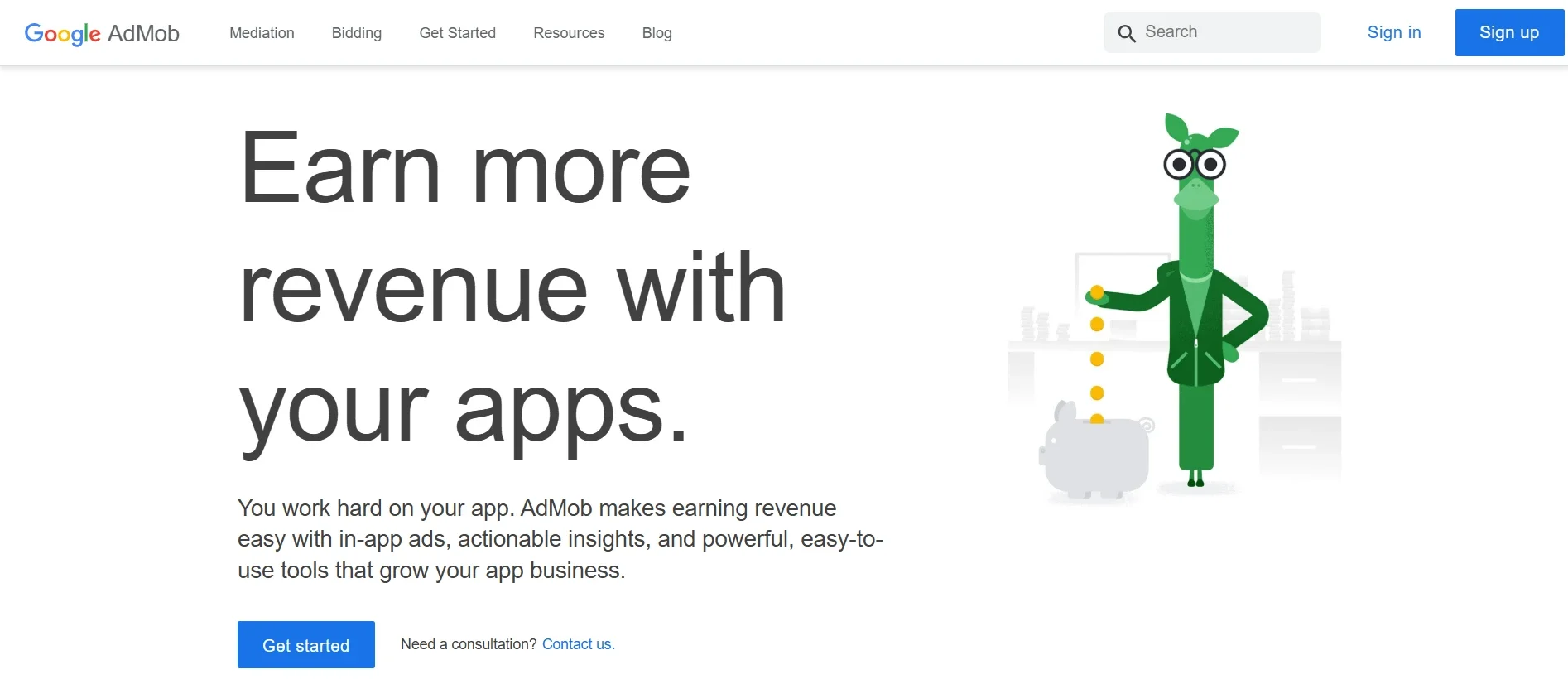
AdMob by Google stands out as one of the top mobile gaming ad networks available, offering a comprehensive suite of tools and formats that make it a preferred choice for game developers and publishers worldwide. Its highly customizable ad formats go well beyond standard static banners or basic pre-roll video ads, incorporating in-game messaging, push notifications, and a diverse range of video ad options that blend naturally into the gaming experience without disrupting player engagement.
The platform operates on a real-time bidding system, where ad units are auctioned to the highest-spending advertisers. This ensures that publishers consistently earn competitive revenue for every impression served, maximizing the overall monetization potential of their apps.
AdMob also equips developers with a powerful set of automated analytics tools designed to monitor campaign performance with precision. These tools provide detailed insights into gamer behavior, user interests, and trending patterns across the mobile gaming landscape. Armed with this data, developers and advertisers can craft highly targeted campaigns that reach the right audience segments at the most opportune moments, improving both engagement rates and conversion outcomes.
The network takes an intelligent approach to audience segmentation, specifically focusing on players who show little interest in making in-app purchases. It tailors ad delivery based on individual user preferences and behavioral signals, meaning ads feel relevant rather than intrusive. This leads to higher click-through rates and stronger advertiser demand over time.
For game developers looking to build a sustainable revenue stream without compromising the user experience, AdMob delivers a well-rounded, data-driven solution. Its flexibility, reach, and targeting precision make it one of the most reliable mobile gaming ad networks in the industry.
2. Unity Ads
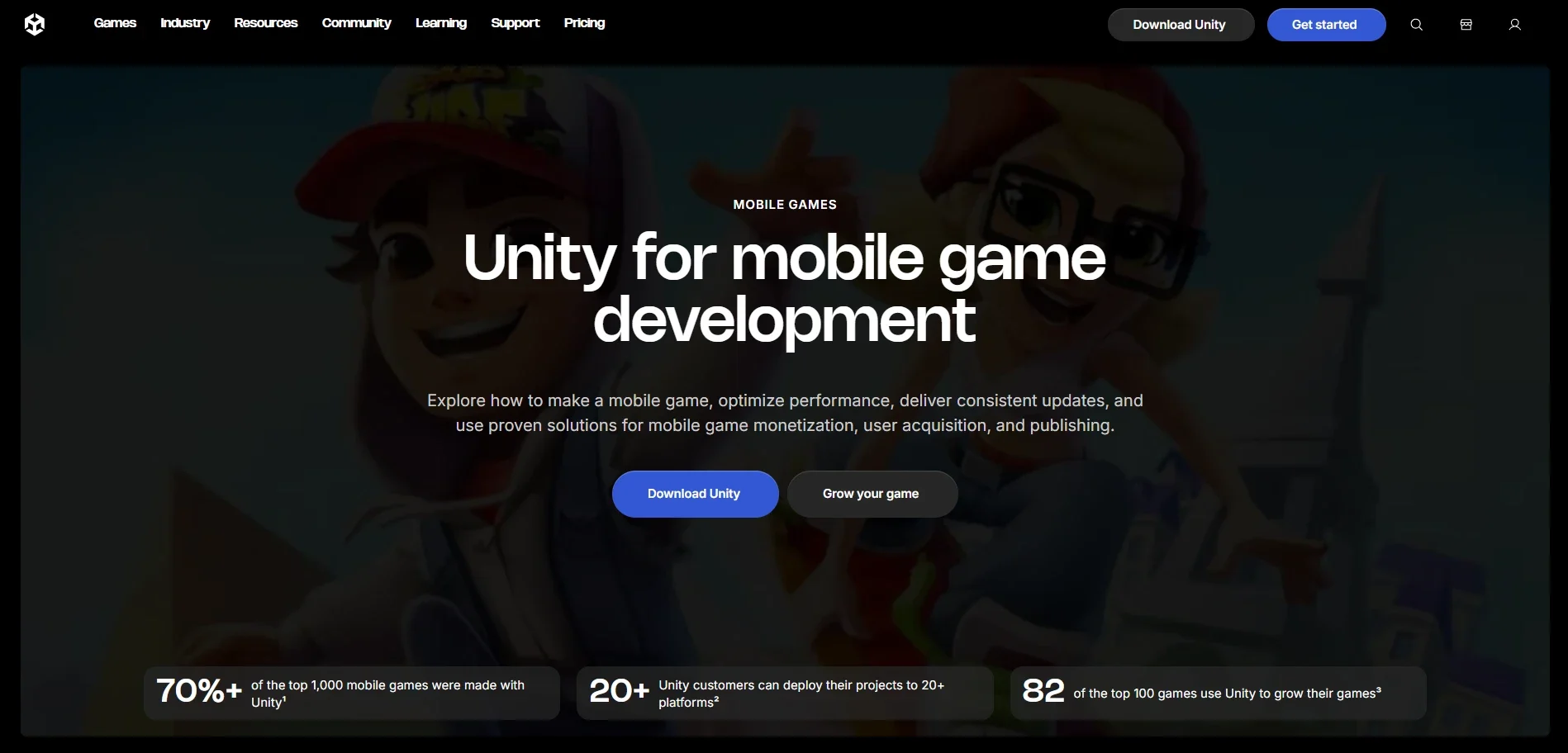
Unity Ads is the most widely used gaming ad network among mobile publishers, and for good reason. Built directly into the Unity game engine, it integrates with a developer’s existing workflow without requiring a separate SDK setup in most cases. The platform has expanded significantly in recent years, moving well beyond basic ad delivery to offer a full growth stack covering user acquisition, monetization, and analytics.
The network is powered by Vector, Unity’s proprietary self-learning AI model that handles targeting, bidding optimization, and creative matching. Vector processes behavioral signals to identify users most likely to engage with specific ad formats and game genres, which directly improves eCPMs for publishers by making their inventory more valuable to advertisers.
On the monetization side, Unity supports rewarded video, full-screen interstitials, and banner formats. Rewarded video is where the network consistently performs best, particularly in casual and hypercasual titles. Publishers connect to the Unity Ads network and Unity Exchange through a single SDK, which simplifies integration and gives access to competitive demand from a wide pool of advertisers.
Unity also participates as a bidder in leading mediation platforms, allowing publishers using third-party mediation stacks to include Unity demand without being locked into Unity’s own mediation solution. The reporting dashboard provides impression-level data, creative performance breakdowns, and revenue forecasting tools.
For game developers already using Unity’s engine, this network is a natural starting point. Even for those using other engines, Unity Ads remains one of the highest-performing networks for rewarded inventory, and its machine learning infrastructure gives it a meaningful edge in targeting precision.
3. AppLovin
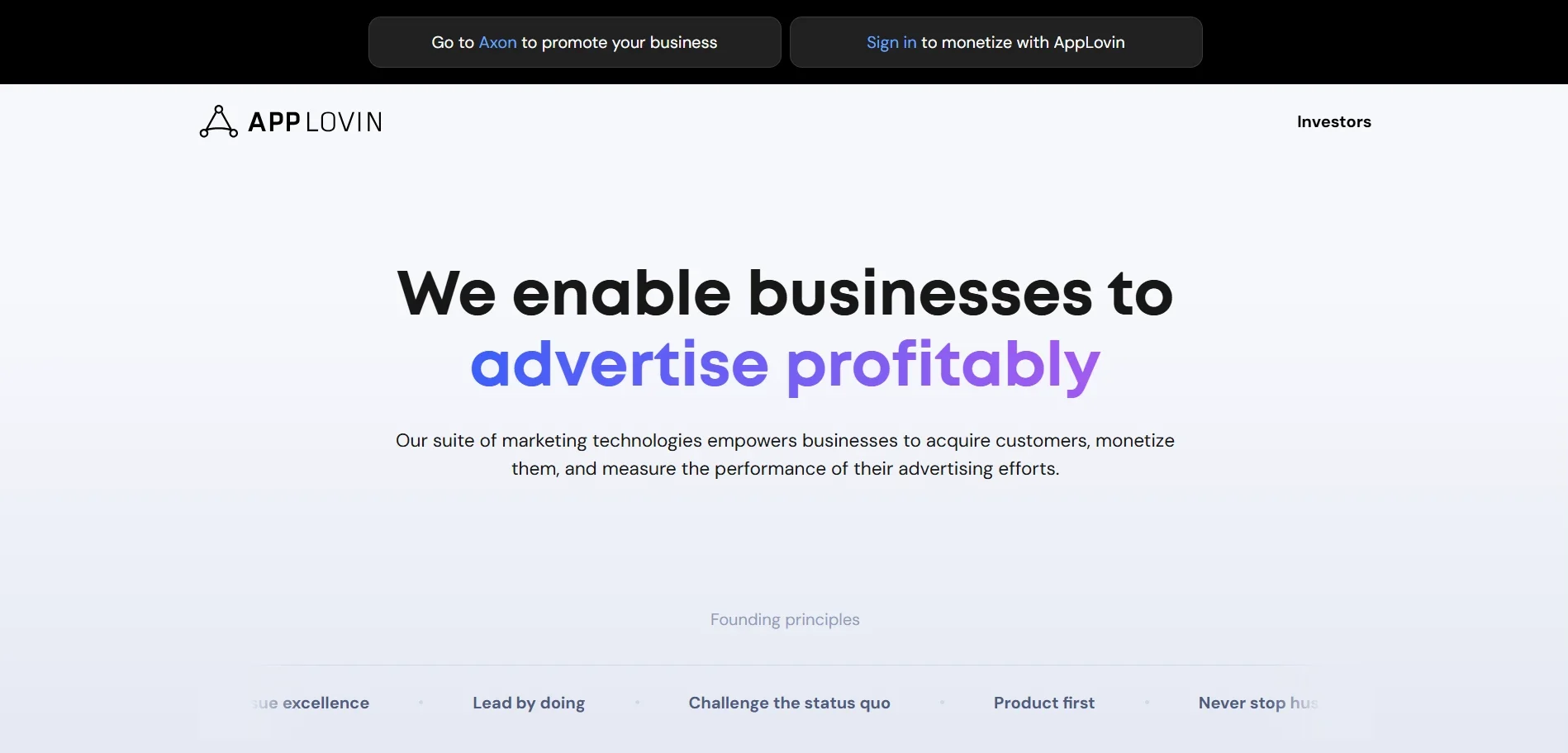
AppLovin has positioned itself as one of the most complete platforms in mobile advertising, combining a high-volume ad network with its MAX mediation solution, the AXON AI engine for campaign optimization, and a growing suite of analytics and creative tools. The platform reaches over 1.5 billion devices monthly and supports banner, interstitial, rewarded video, and playable ad formats across iOS and Android.
What sets AppLovin apart from traditional ad networks is AXON, its machine learning system that processes thousands of data points per ad impression to predict which creatives and placements will drive the highest return. According to the company, AXON evaluates multiple data buckets per impression, including attribution signals, conversion data from advertisers, and historical performance from across the AppLovin network. This level of optimization tends to produce above-average eCPMs, particularly for publishers with strong engagement metrics.
MAX, AppLovin’s mediation platform, supports in-app bidding across a wide range of networks and gives publishers a unified auction environment where demand sources compete simultaneously for every impression. This eliminates the revenue loss that comes from traditional waterfall setups, where impressions are passed down a prioritized list rather than auctioned in real time.
AppLovin supports CPI and CPC bidding models and provides detailed analytics at the campaign, creative, and ad unit levels. For publishers managing multiple titles or looking to scale a successful game across markets, the combination of network reach, mediation, and analytics tools in a single platform is genuinely useful. Gaming publishers working with both advertising and affiliate revenue streams may also find it worthwhile to review how affiliate networks for publishers can complement ad-based monetization.
4. Chartboost
Chartboost has long been one of the most trusted names in mobile game advertising. Originally known for its direct deals marketplace that let developers cross-promote games without giving up a cut to intermediaries, it has since grown into a full-featured ad network with programmatic capabilities and a significant demand pool. Chartboost was acquired by LoopMe in December 2024, and the platform continues to operate as a dedicated gaming ad network.
The network counts over 900 million monthly active users and handles more than 200 billion monthly ad requests, making it one of the largest gaming-focused ad inventories available. Publishers benefit from Chartboost’s automatic ad inventory optimization, which dynamically adjusts placements to maximize revenue per impression without requiring manual fine-tuning.
One of Chartboost’s most appreciated features for publishers is the level of control it offers over ad placement. Because publishers grant access to their ad space rather than ceding it entirely to the network, there is meaningful transparency into who advertises within a given title. Free cross-promotion for interstitial and video formats is available, which is particularly valuable for studios with multiple games in their catalog.
The network provides an average revenue share of 90% to game developers and supports CPI payment models. Targeting is based on user location, demographics, device type, operating system, and in-app behavior, giving advertisers the precision they need while ensuring publishers’ inventory is matched with relevant demand. Chartboost also supports real-time bidding and integrates with leading mediation platforms.
5. Mintegral
Mintegral is a global programmatic advertising platform with a strong track record in the mobile gaming space, particularly across the APAC region and in genres like match-3, simulator, and mid-core games. The platform connects publishers to more than 10,000 app partners through SDK integration and participates in over 20 foreign ad exchanges, giving it strong demand depth and geographic coverage.
The network uses AI to power both its user acquisition and monetization products. On the demand side, Mintegral’s AppGrowth solution helps advertisers find and scale quality users using machine learning and interactive creatives, including playable ads. On the supply side, publishers access premium worldwide traffic and benefit from Mintegral’s optimization algorithms that maximize eCPMs across banner, interstitial, native, and appwall formats.
Mintegral’s creative capabilities are a genuine differentiator. The platform builds interactive and engaging video ads designed to drive app downloads and improve in-app engagement. Advertisers working with Mintegral have access to custom playable ad creation, which consistently produces higher conversion rates than standard video formats. For publishers, this means the advertiser demand coming through Mintegral is typically higher quality, which supports stronger impression-level revenue.
Pricing models include CPA, CPM, CPI, and CPC, giving publishers flexibility in how they monetize their inventory. Mintegral has shown consistent growth on iOS, with the most recent benchmark data indicating a 2% year-over-year gain in ad monetization market share on that platform.
6. Liftoff
Liftoff is a privacy-first mobile advertising and monetization platform that operates across the full app growth lifecycle, from user acquisition through engagement, monetization, and analytics. Formed through the merger of Liftoff and Vungle in 2021, the combined entity has become one of the largest independent ad tech companies focused on mobile. The Vungle Exchange, which powers Liftoff’s supply-side business, serves ads across more than 167,000 SDK-integrated apps as of early 2026.
The platform’s core differentiator is Cortex, its proprietary neural network prediction engine that handles all bidding and performance decisions across its product suite. Cortex processes behavioral and attribution signals to identify high-value users with strong accuracy. According to Liftoff, the engine has contributed to a 21% year-over-year growth in demand-side customers and reaches approximately 1.4 billion daily active users through its SDK integrations.
Ad formats supported include triple-page ads, page turner formats, playable video, MREC banners, and full-screen interstitials. The focus on video and interactive formats reflects the platform’s understanding that passive formats like standard banners generate significantly lower eCPMs in gaming environments. Liftoff also delivers over two billion ads daily across 500,000 mobile applications in more than 140 countries, which gives publishers broad geographic monetization coverage.
Liftoff supports CPA, CPM, CPC, and CPI bidding models, and places a strong emphasis on user privacy compliance, which is increasingly important for publishers operating in markets with active privacy regulation. For publishers also working with push-based ad formats, comparing push notification ad networks against in-app solutions can help optimize a full monetization stack.
7. Media.net
Media.net operates as a contextual advertising network backed by Yahoo and Bing, which gives it a unique demand profile among the networks on this list. While it is not exclusively a gaming ad network, it is a strong option for publishers who operate gaming websites, gaming content blogs, or hybrid platforms that combine web content with app monetization.
The network’s Display-to-Search (D2S) technology matches ads to pages based on keyword context and upcoming search intent signals, which produces highly relevant placements and strong CPMs for content-rich environments. Customizable ad units allow publishers to adjust format, size, and style to match their site’s design, which reduces ad blindness and improves click-through rates.
For mobile game publishers who also run gaming news sites, review platforms, or community hubs, Media.net offers a way to monetize web-based traffic with contextual display ads that complement rather than compete with in-app advertising revenue. The network works with top publishers and premium ad technology companies, and its exclusive demand from the Yahoo-Bing ecosystem means that eCPMs tend to hold up well even in competitive verticals.
Publishers evaluating Media.net alongside display advertising alternatives should also consider reviewing high CPM ad networks to compare how contextual demand stacks up against other premium display options.
8. Start.io
Start.io, previously known as StartApp, is a mobile marketing and audience intelligence platform with a particular focus on interstitial and native ad formats. The platform has built a proprietary first-party data layer through its SDK integrations, giving it strong audience segmentation capabilities that many smaller networks cannot match.
For publishers, Start.io supports app walls, native ads, interstitial ads, and video placements. The platform uses eCPM and CPM pricing models to maximize revenue per impression and connects game publishers with interactive ad creators who produce custom graphics and animated formats designed to drive engagement. The ability to target across a large number of global audience segments is one of Start.io’s core selling points for advertisers, translating into competitive demand for publisher inventory.
Start.io is particularly well-suited to publishers developing free apps who want to monetize through advertising without requiring users to make in-app purchases. The platform’s interstitial focus means it performs best in games with natural break points between sessions or levels, where a full-screen ad can be served without disrupting the flow of play.
9. Partners.House
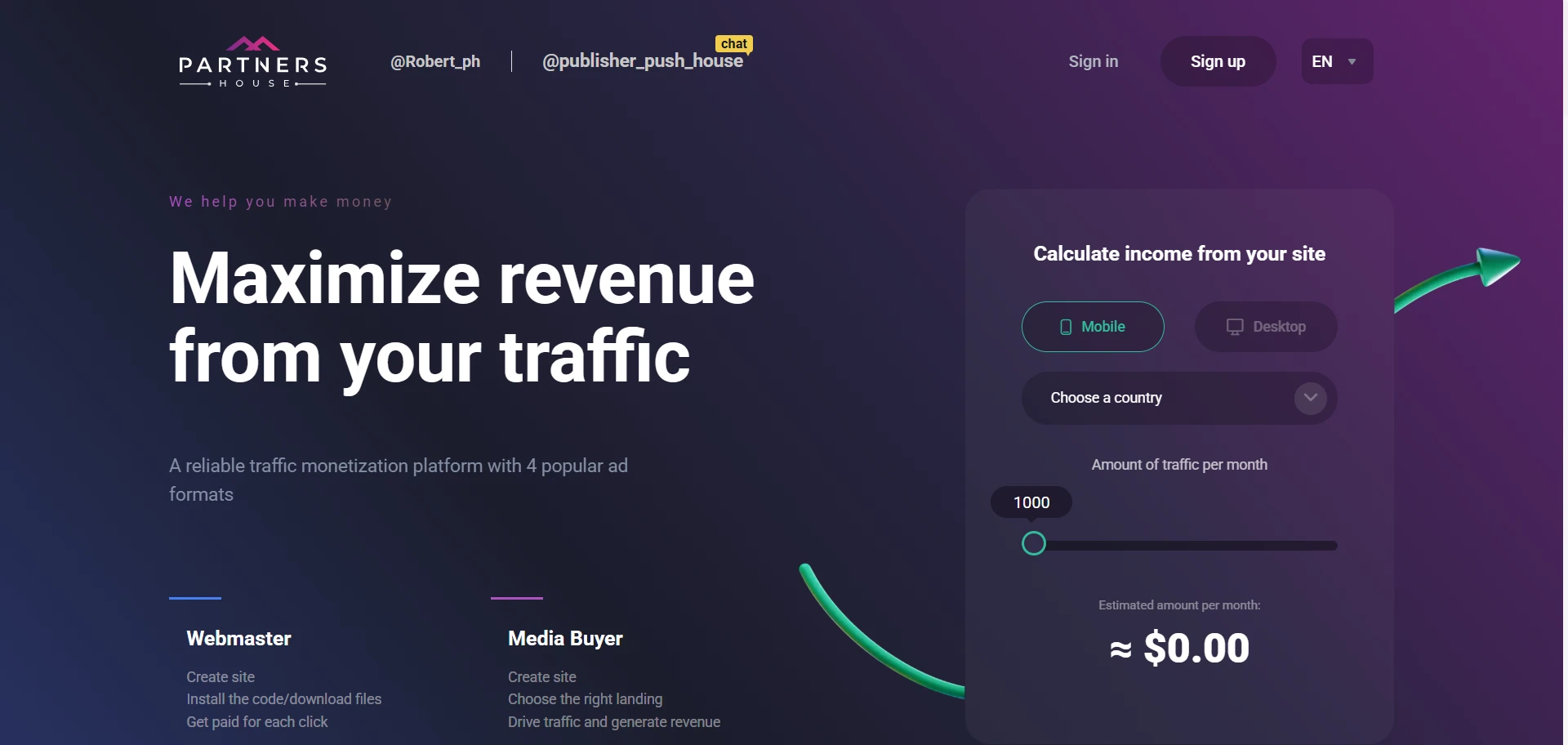
Partners.House is a push notification monetization network founded in 2019 and headquartered in Slovakia. It operates across more than 180 countries and has built a subscriber base of over 90 million active push users, making it one of the more established push monetization platforms for publishers who want to complement in-game advertising with an additional revenue stream.
The platform works by installing a universal push subscription code on a publisher’s website or app, allowing visitors to opt into push notifications. Once subscribed, those users receive targeted push ads, and the publisher earns revenue based on a revenue share model. Partners.House supports 180+ GEOs and delivers 100% fill on its push inventory, which means publishers are not left with unsold impressions.
The minimum payout threshold is $50, which is accessible for smaller publishers. Payment methods include Web Money, Bitcoin, VISA, MasterCard, Capitalist, Yandex, and QIWI. The platform also includes a fraud prevention system that detects and eliminates bots and low-quality traffic before it affects publisher earnings.
For gaming publishers who run websites alongside their apps, push monetization from Partners.House can add a meaningful passive income layer without interfering with in-app ad revenue. Publishers looking for additional context on how push ads compare to other monetization approaches can also review how CPM ad networks handle display inventory for web-based traffic.
10. MyLead
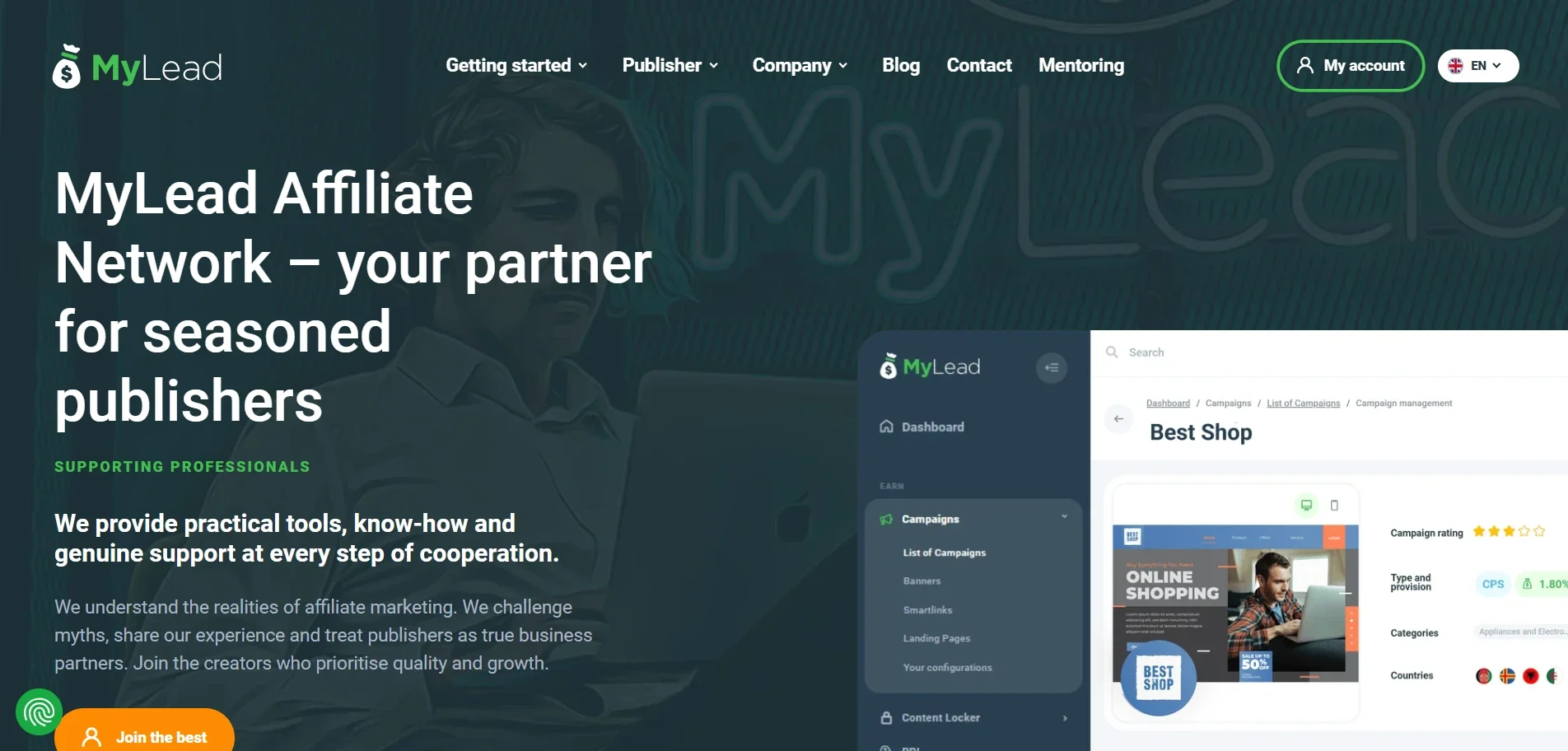
MyLead is an international affiliate and performance marketing network that has paid out over $6 million to its publishers. While it operates across multiple verticals, it has a notable presence in the gaming advertising space through affiliate-based campaigns that reward publishers for driving installs, registrations, or in-app purchases from gaming advertisers.
For game publishers who want to diversify beyond display and video advertising, MyLead offers access to affiliate campaigns with commission structures that can produce high per-conversion payouts when aligned with the right audience. The platform provides training and resources for new members and supports a wide range of promotional methods, including social media, content marketing, and email.
Payment options include PayPal, Bitcoin, WebMoney, Wire Transfer, Revolut, Bank Transfer, and Skrill, with a minimum payout of $20. The accessible threshold makes MyLead a practical option for smaller publishers who are still scaling. For those interested in how performance-based networks compare to traditional display models, e-commerce ad platforms offer a useful comparison point for understanding commission-driven monetization structures.
Quick Comparison: Gaming Ad Networks at a Glance
Choosing the right network often comes down to matching platform strengths with your game’s specific profile. Unity Ads and Liftoff are the two networks showing consistent year-over-year growth on both iOS and Android, making them strong defaults for publishers who want reliable performance across platforms. AppLovin’s AXON engine and MAX mediation suite make it particularly powerful for publishers managing multiple titles or running complex mediation stacks.
Chartboost is the best option for studios that want direct control over ad placements and cross-promotion between their own titles. Mintegral leads for publishers in the APAC region or working in match-3, simulator, or mid-core genres. Liftoff is the strongest choice for publishers prioritizing privacy compliance alongside performance. Media.net suits web-based gaming content publishers better than it suits pure app developers.
Partners.House and MyLead serve different functions from the others: they are best treated as supplementary revenue channels rather than primary in-app monetization networks. AdColony and Start.io round out the list with strong video formats and solid demand, respectively.
How to Get the Most from a Gaming Ad Network
Signing up for a network is the straightforward part. Actually maximizing revenue from it requires deliberate setup and ongoing attention. The most common mistake publishers make is treating ad integration as a set-and-forget task. Formats, placements, and network mixes all require regular testing to find what works for a specific game and audience.
Start by testing rewarded video in any game with in-game currency or consumables. Players who opt in are already engaged, and advertiser demand for rewarded placements consistently produces the highest eCPMs across nearly all gaming ad networks. Once the rewarded video is performing well, layer in interstitials at natural break points and use A/B testing to determine the optimal frequency cap before player churn starts to rise.
Running multiple networks through a mediation platform is almost always more effective than relying on a single network. Mediation ensures every impression is auctioned to the highest bidder in real time rather than filled by a single network at a fixed rate. AppLovin’s MAX, Unity’s LevelPlay, and independent mediation solutions all support this approach. Publishers using ad server technology to manage ad delivery across multiple channels may also benefit from reviewing how ad servers for publishers integrate with gaming networks.
Finally, treat your analytics as seriously as your ad format choices. eCPM alone does not tell the full story. Fill rate, ARPDAU, and retention data together reveal whether a given ad strategy is growing revenue or quietly eroding the player base that generates it.
Frequently Asked Questions
What is the best gaming ad network for small publishers?
Unity Ads and Chartboost are both strong starting points for small publishers because they have accessible onboarding, clear documentation, and do not require minimum traffic thresholds to get started. Chartboost’s 90% revenue share is particularly favorable for smaller studios that need to retain as much per-impression revenue as possible while their audience grows.
How much do gaming ad networks pay per 1,000 impressions?
eCPMs vary significantly by format, region, game genre, and the quality of a publisher’s audience. Rewarded video ads in tier-1 markets like the US, UK, and Japan typically deliver eCPMs between $10 and $30 on well-performing networks like Unity Ads and AppLovin. Interstitials generally range from $3 to $10, and banner ads sit below $2. These are indicative ranges; actual eCPMs depend heavily on audience engagement and advertiser demand in a given period.
Can I use multiple gaming ad networks at the same time?
Yes, and most experienced publishers do. Running multiple networks through a mediation platform like AppLovin MAX or Unity LevelPlay allows each impression to be auctioned in real time, so the highest bidder wins every time, rather than a single network filling at a fixed rate. This approach consistently produces higher total revenue than using a single network exclusively.
What ad formats work best for mobile game monetization?
Rewarded video is consistently the highest-performing format across mobile game genres because it is opt-in, player-controlled, and tied to an in-game reward that players value. It produces the highest eCPMs and the lowest negative impact on retention. Playable ads also perform well for publishers with multiple titles in their portfolio, since they drive quality installs from engaged users. Interstitials are effective when used sparingly at natural break points. Banner ads add a revenue floor but should not be relied upon as a primary monetization format in gaming environments.
What is the difference between in-app bidding and waterfall monetization?
Waterfall monetization routes ad requests through a prioritized list of networks, with each network offered an impression at a fixed CPM rate before the request moves to the next. In-app bidding, by contrast, triggers a simultaneous real-time auction where multiple networks compete at the same moment. Because every network bids at market rate simultaneously, in-app bidding eliminates the inefficiency of waterfalls and consistently produces higher average eCPMs. Most leading gaming ad networks, including Unity Ads, AppLovin, and Chartboost, now support in-app bidding.
Conclusion
The best gaming ad network for any publisher depends on the game genre, target audience, geographic markets, and revenue goals. Unity Ads and AppLovin are the strongest all-around performers for publishers who want high eCPMs, sophisticated targeting, and access to large demand pools. Chartboost suits studios that want direct control over placements and cross-promotion. Mintegral is the right choice for games with strong APAC audiences or a match-3 and simulator player base. Liftoff delivers consistent growth on both major platforms with a strong privacy-first approach.
No single network should be treated as a complete solution. The publishers who generate the most from in-game advertising are those who combine two or three complementary networks under a mediation platform, test formats systematically, and monitor retention data alongside revenue metrics to ensure their ad strategy supports long-term player engagement rather than undermining it.
Test platforms against your actual game data, start with the formats that suit your genre, and build from there.
