
Disclosure: Some links in this article are affiliate or sponsored links. If you buy through them, we may earn a commission at no extra cost to you. Our opinions are our own.

Short on time? Here’s the quick answer: Decodo (formerly Smartproxy) and Oxylabs are the top two for Ticketmaster and similar ticketing platforms, covering both performance and reliability.
Buying tickets to sold-out concerts or sporting events has turned into a frustrating race against the clock. The moment a popular show goes live on Ticketmaster, the best seats disappear within seconds. What most people don’t realize is that a large share of those purchases comes from automated ticket bots running through ticketing proxies. Each proxy carries a separate IP address, so even when the platform tries to detect or restrict suspicious activity, these tools remain largely invisible.
Ticket scalping has grown into a serious industry problem. Resale platforms frequently list tickets at several times face value after events sell out in minutes. The scale of this issue reached a point where it triggered legislative scrutiny in multiple countries. Yet in many regions, the practice still falls outside enforceable restrictions, which means it keeps happening.
Now, let’s get into the Best Ticketmaster Proxies for 2026.
Best Ticketmaster Proxies 2026
1) Decodo (formerly Smartproxy)
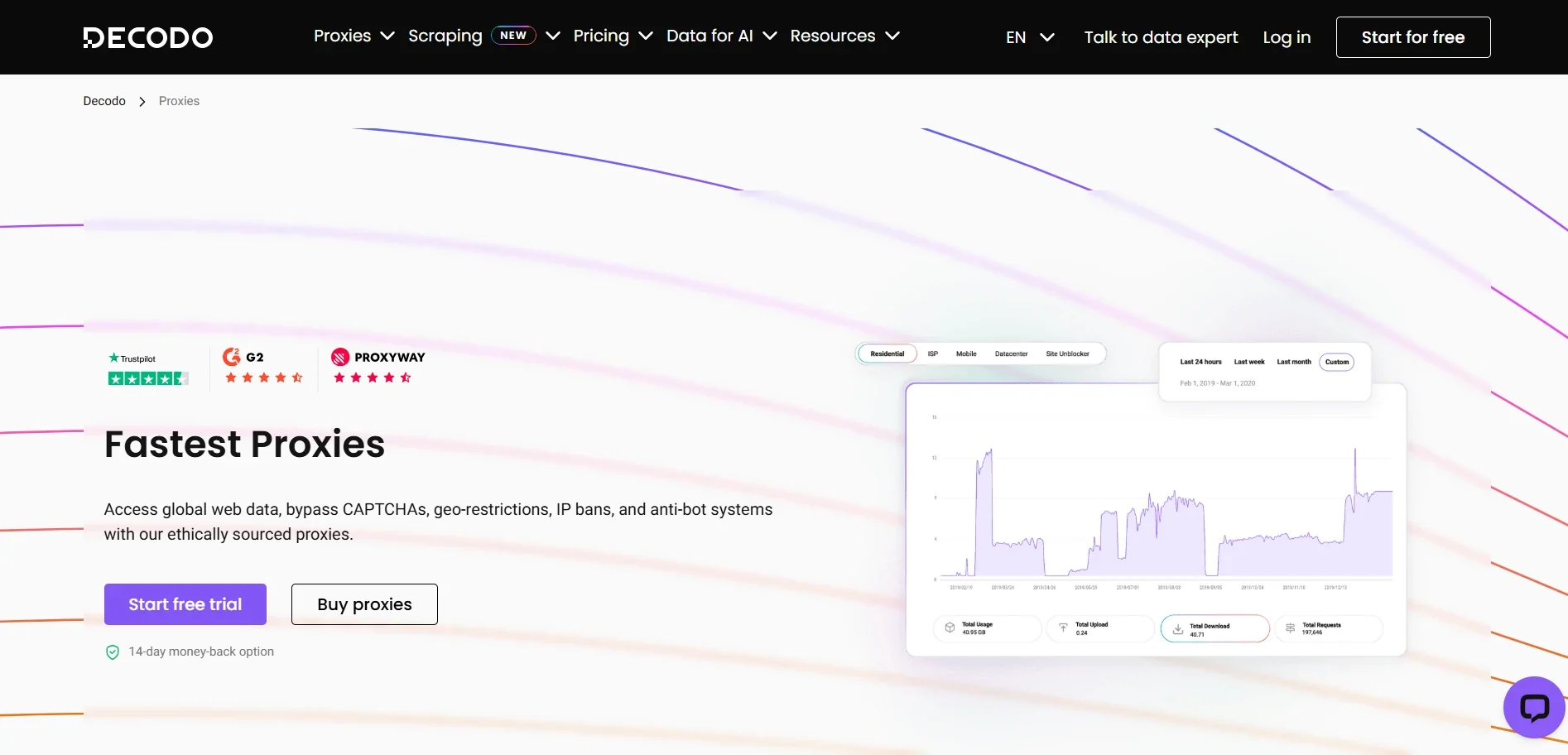
Decodo, which rebranded from Smartproxy in April 2025, sits at the top of our list for good reason. The sheer scale of its network makes it genuinely hard for platforms like Ticketmaster to pin down what’s happening. With residential proxies covering more than 195 locations worldwide, most use cases are well covered straight out of the box.
The IP pool now exceeds 65 million rotating residential addresses, and the platform processes upward of 650 billion proxy requests monthly with a reported success rate of 99.5%. For anyone who has tried using datacenter proxies against Ticketmaster’s bot filters and gotten blocked, switching to Decodo’s residential pool makes a noticeable difference. City-level targeting is available for places like London, New York, Berlin, and beyond, which matters when ticket queues are geographically segmented.
Pricing for residential proxies starts at $8.50 per GB, with pay-as-you-go and subscription plans both available. The dashboard is clean, setup is fast, and the 3-day free trial means there’s no commitment required upfront. For ticketing work specifically, the combination of a massive IP pool, automatic rotation, and solid uptime history makes Decodo one of the most dependable tools on this list.
2) Bright Data
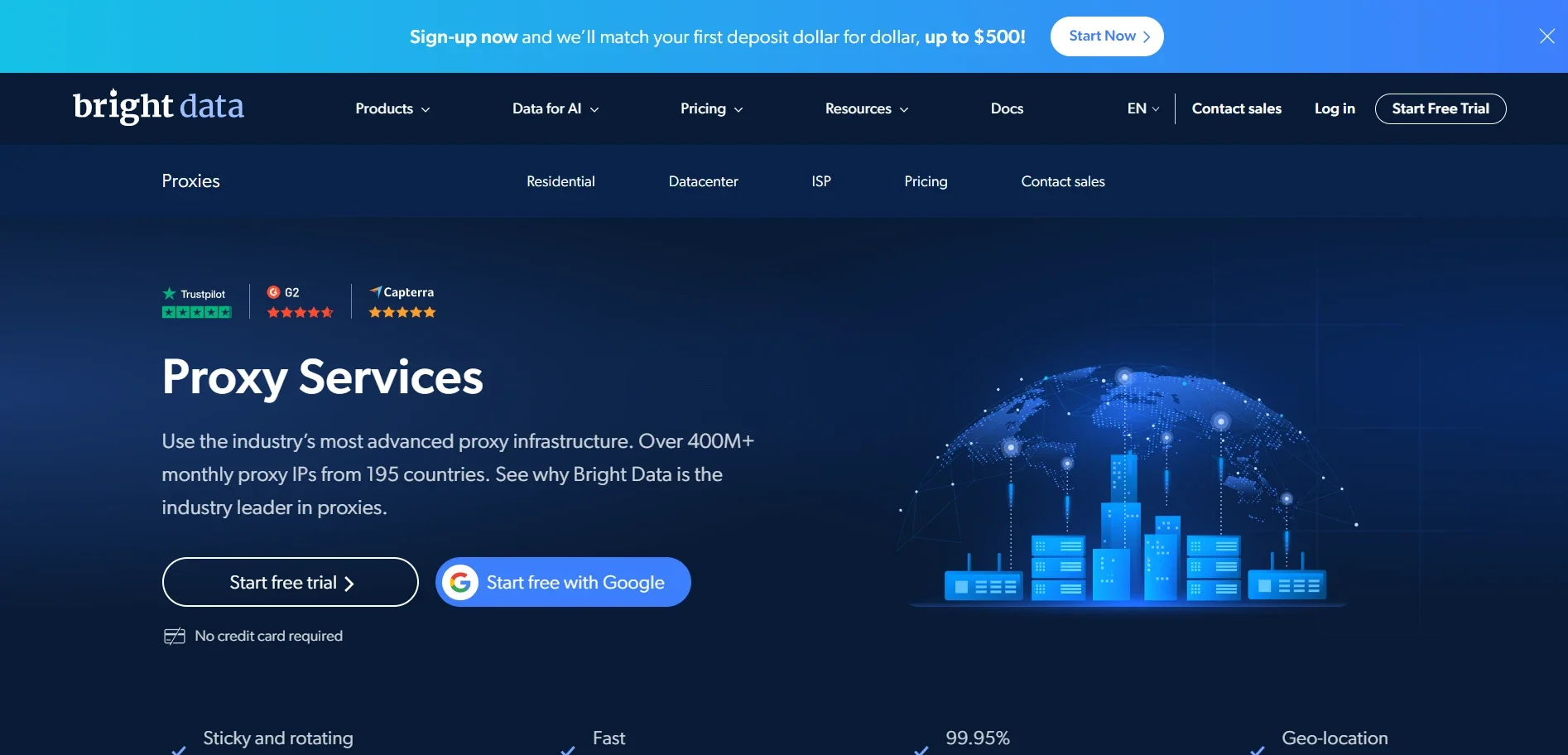
Bright Data is the largest residential proxy network in the industry by most measures. The platform crossed $300 million in annual recurring revenue in 2025 and now serves over 20,000 organizations globally, including a significant share of Fortune Global 500 companies. The residential pool sits at 400 million IPs across 195 countries, with separate mobile, ISP, and datacenter networks rounding out a very complete offering.
For Ticketmaster specifically, the rotating residential proxies handle CAPTCHA bypass through built-in resolvers, and the Proxy Manager gives you granular control over rotation intervals and sticky session duration. Pay-as-you-go residential pricing starts at $4 per GB for lower volumes, moving down to $2.50 per GB at higher tiers. The platform isn’t the cheapest option, but the infrastructure depth justifies the cost at serious scale.
Those doing web scraping work alongside ticketing will appreciate the additional tooling like the Web Unlocker and Scraping Browser, both of which integrate cleanly into automated workflows. Customer support response times average around 14 minutes during business hours, which is notably fast for the proxy space.
3) Oxylabs
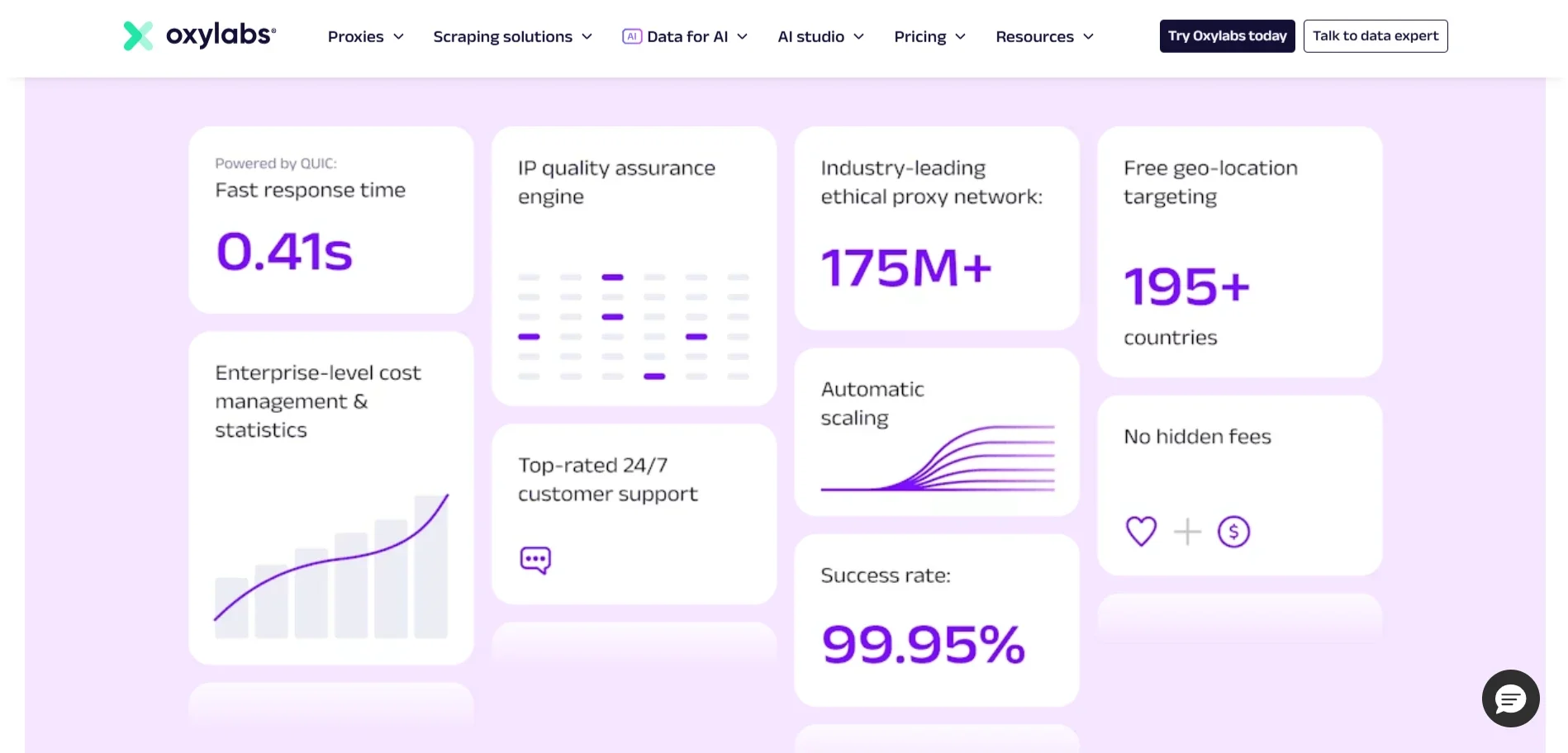
Oxylabs operates one of the largest residential IP pools available today, currently sitting at 175 million addresses across 195 countries. That scale matters on Ticketmaster because a larger pool means a lower chance of any single IP appearing more than once in a short window. The advertised success rate across residential proxies is 99.95%, with an average response time of 0.6 seconds.
What makes Oxylabs worth the premium for ticketing is the in-house proxy rotation, which handles IP switching automatically and keeps traffic patterns looking natural. Geo-targeting works down to the city, ZIP code, and ASN level, giving you fine control over where your requests appear to originate. Residential proxy pricing starts at $3.49 per GB for the Starter plan, scaling up from a pay-as-you-go entry at $4 per GB.
The platform is compliance-focused and a member of the Ethical Web Data Collection Initiative. It runs KYC checks during onboarding, so it doesn’t fit casual or anonymous use cases, but for anyone running a structured ticketing operation, that transparency tends to come with better IP quality and reliability. Oxylabs carries a 4.8/5 rating on Trustpilot based on a large review sample, and enterprise clients consistently highlight stability as a key differentiator.
4) Storm Proxies
Storm Proxies takes a different approach from the providers above. Rather than a vast global IP pool, the focus here is on simplicity, reliability, and affordability for ticketing-specific workflows. Their rotating residential proxies and backconnect datacenter options are both well-suited to Ticketmaster, and the 99.9% guaranteed uptime means sessions rarely drop mid-purchase.
The IP pool is powered by over 70,000 datacenter addresses, the majority based in the US and Europe, which aligns well with the geographic spread of most major ticketing events. There are no hidden bandwidth fees; bandwidth is unlimited across plans. Storm Proxies also provides access to your account immediately after payment, with no waiting period.
Prices start at $50 per month for 5 ports. A 24-hour money-back guarantee is included, and customer support runs around the clock. For those who want straightforward ticketing proxies without the complexity of enterprise-grade platforms, Storm Proxies delivers on the basics well. If you’re still getting familiar with how different proxy types behave, the residential proxies guide on Bloggrand walks through the practical differences in plain language.
5) High Proxies
High Proxies rounds out this list as a focused, no-frills option built specifically around use cases like ticketing and targeted data collection. The platform doesn’t try to be an all-in-one enterprise tool. Instead, it concentrates on making dedicated proxies work cleanly for platforms with strict detection systems like Ticketmaster.
Each proxy is private and assigned exclusively to one user, which avoids the shared-IP reputation issues that can cause blocks on sites that track behavioral patterns across IPs. A money-back guarantee covers purchases if the service doesn’t meet expectations. High Proxies won’t be the right fit for those needing massive concurrency or global IP diversity, but for targeted, lower-volume ticketing work, it punches well above its price point.
Why Rotating Proxies Work for Ticketing
Rotating proxies remain the standard choice for ticketing bots because of how Ticketmaster and similar platforms screen traffic. Here’s what makes them effective.
Ticketmaster uses CAPTCHA systems to separate bots from real users. Rotating proxies, when paired with CAPTCHA resolvers, cycle through fresh IPs before any single address triggers the filter. This keeps the purchasing flow moving without interruption.
Detection also happens through behavioral pattern analysis. A single IP buying multiple tickets in quick succession registers as suspicious immediately. Rotating IPs spreads that activity across dozens or hundreds of addresses, making the purchasing pattern look like it’s coming from separate individuals rather than one automated session.
Speed is another factor. Rotating proxies can execute multiple concurrent purchases across different IPs simultaneously, which matters enormously when ticket inventory drops from thousands to zero in under a minute.
Finally, the automatic IP rotation that most of these providers offer means there’s no manual work involved. Sessions cycle on their own, making the whole process faster and more reliable than managing static IP lists by hand. If you’re comparing options across different use cases, the fastest proxy providers breakdown covers the speed benchmarks in more detail.
Also useful for related tasks:
- Shared Proxies Compared
- Cheapest Proxy Providers
- Proxies for Android
- US Proxy Providers
- India Proxy Options
- Korean Proxy Services
FAQs: Ticketmaster Proxies for 2026
Should I use rotating residential proxies or datacenter proxies for Ticketmaster?
Rotating residential proxies is the stronger choice for Ticketmaster in most cases. They appear as genuine household IPs, which makes them far harder to flag than datacenter addresses. Datacenter proxies are faster and cheaper, but Ticketmaster’s detection systems have become better at spotting them. If you only need a small number of tickets, datacenter proxies can still work, but residential is the safer investment for consistent results.
Can private proxies work for Ticketmaster?
Yes, private proxies can be used on Ticketmaster. A dedicated private IP carries no prior abuse history from other users, which reduces the chance of pre-existing blocks. That said, a rotating residential setup will generally outperform a static private IP for volume purchasing.
Is using proxies for Ticketmaster legal?
Ticketmaster’s terms of service prohibit automated purchasing tools, including bots and the proxies that support them. The legal picture varies by country regarding resale activity more broadly, but using proxies to bypass platform restrictions does violate their terms. Anyone using these tools should understand the platform risk involved.
Conclusion
Getting tickets to high-demand shows through Ticketmaster is genuinely difficult without the right tools. The platform’s anti-bot systems are designed to block exactly the kind of rapid, high-volume purchasing that ticket scalpers and resellers depend on. Proxies don’t eliminate that challenge entirely, but a well-chosen rotating residential provider makes the process far more reliable.
Decodo and Bright Data are the two strongest picks for anyone serious about ticketing proxies in 2026. Decodo offers a better entry price and a cleaner setup experience, while Bright Data’s sheer IP depth and bypass tooling make it the better call at serious scale. Oxylabs belongs in the conversation for enterprise-level work where IP quality and compliance matter.
The right proxy won’t guarantee tickets every time, but it removes the biggest technical barrier between your bot and the checkout page.
