
Disclosure: Some links in this article are affiliate or sponsored links. If you buy through them, we may earn a commission at no extra cost to you. Our opinions are our own.
Push notifications have quickly become one of the most effective tools in a publisher’s monetisation arsenal. Unlike traditional display ads that often get ignored or blocked, push notification ads are clickable messages delivered directly to a user’s browser or device, making them hard to miss and easy to act on. These ads are tied to websites and are specifically designed to bring users back, drive engagement, and boost conversions over time.
What makes push notification ads stand out is their versatility. They work seamlessly on both desktop and mobile devices, allowing publishers to reach their audience regardless of the device they use. Another key advantage is the consent-based nature of this format. Users only receive these ads after they have voluntarily opted in to receive notifications from a particular website. This opt-in model ensures that the audience seeing these ads is already somewhat interested, which naturally leads to higher click-through rates and engagement than many other ad formats.
For publishers, adding push notification ads to their monetisation strategy is relatively simple. It does not require any additional screen space on the website and does not interfere with the existing layout or user experience. Once a visitor subscribes, the publisher can continue earning revenue from that user even after they have left the site, as notifications can be delivered at any time. This creates a consistent and ongoing revenue stream that works in the background without demanding constant effort.
With the push notification ad market growing at a strong pace globally, more and more publishers are turning to dedicated push ad networks to maximise their earnings. In this article, we cover the best push notification ad networks for publishers that are worth considering.
What is a Push Notification Ad Network?
A push notification ad network is a platform that acts as a bridge between publishers and advertisers, making it easy for both parties to connect and trade ad inventory without any direct negotiations. For affiliate marketers and performance-driven publishers, these networks offer a smooth and scalable way to reach highly targeted audiences without the complexity of managing direct deals.
The way it works is straightforward. Publishers add a small push notification code to their website. When visitors land on the site, they are prompted to allow notifications. Once a user opts in, they become part of the publisher’s subscriber base. That subscriber data is then pooled into the ad network’s inventory. Advertisers can access this inventory and run their campaigns in real time, targeting users based on factors like device type, browser, location, operating system, and more.
Today, push ads are supported across virtually all major browsers, operating systems, and devices, covering both web push and in-page push formats. Web push ads require the user to subscribe first, while in-page push ads appear directly within the website without needing any prior opt-in, making them useful for reaching a wider audience, including iOS users.
Both publishers and advertisers manage their activity through the network’s dashboard. Publishers monitor their earnings and subscriber growth, while advertisers set up campaigns, define targeting parameters, control budgets, and track performance, all from one place. Most reputable networks also include anti-fraud systems to ensure that the traffic being bought and sold is genuine and from real users.
Best Push Notification Ad Networks
With more players entering the space, choosing the right push notification ad network has become more challenging than ever. The options vary significantly in terms of traffic quality, pricing models, geographic reach, and publisher-friendly features. To help you make an informed choice, below is a breakdown of the top push notification ad networks and what makes each one worth considering.
1) Adsterra
Adsterra has been in the digital advertising space since 2013 and has built a solid reputation among both publishers and advertisers over the years. The network currently serves over 35 billion ad impressions per month across more than 248 GEOs, giving it a wide global reach that works well for publishers with diverse or international audiences.
Publishers working with Adsterra get access to a good range of ad formats, including Popunder ads, In-Page Push ads, Social Bar, Interstitials, Native ads, Display Banners, and Direct Links. The Social Bar is a format developed exclusively by Adsterra and tends to perform well in terms of conversions, often outperforming traditional web push formats. It gives publishers another effective option to monetise their traffic without making the experience feel cluttered for visitors.
The platform operates on a self-serve model, which means publishers and advertisers can sign up and get started without going through lengthy approval processes or waiting for a dedicated manager for every action. Everything is managed through an intuitive dashboard that makes campaign setup and monitoring fairly straightforward. For those who do prefer more personal guidance, Adsterra also offers manager support when needed.
Advertisers on the platform can choose from several pricing models, including CPM, CPC, CPA, CPL, and CPI, which give flexibility depending on the campaign goal. Publishers benefit from this variety as it attracts a broad pool of advertisers across many verticals, helping maintain competitive CPM rates.
Adsterra also has a three-layer security system in place that checks traffic through both automated tools and manual review, keeping the inventory clean for advertisers and ensuring publishers are connected to legitimate demand.
On top of regular ad earnings, Adsterra runs a referral program where publishers can earn a percentage of revenue generated by anyone they bring to the platform, adding a passive income component to the overall monetization mix.
2) Propeller Ads
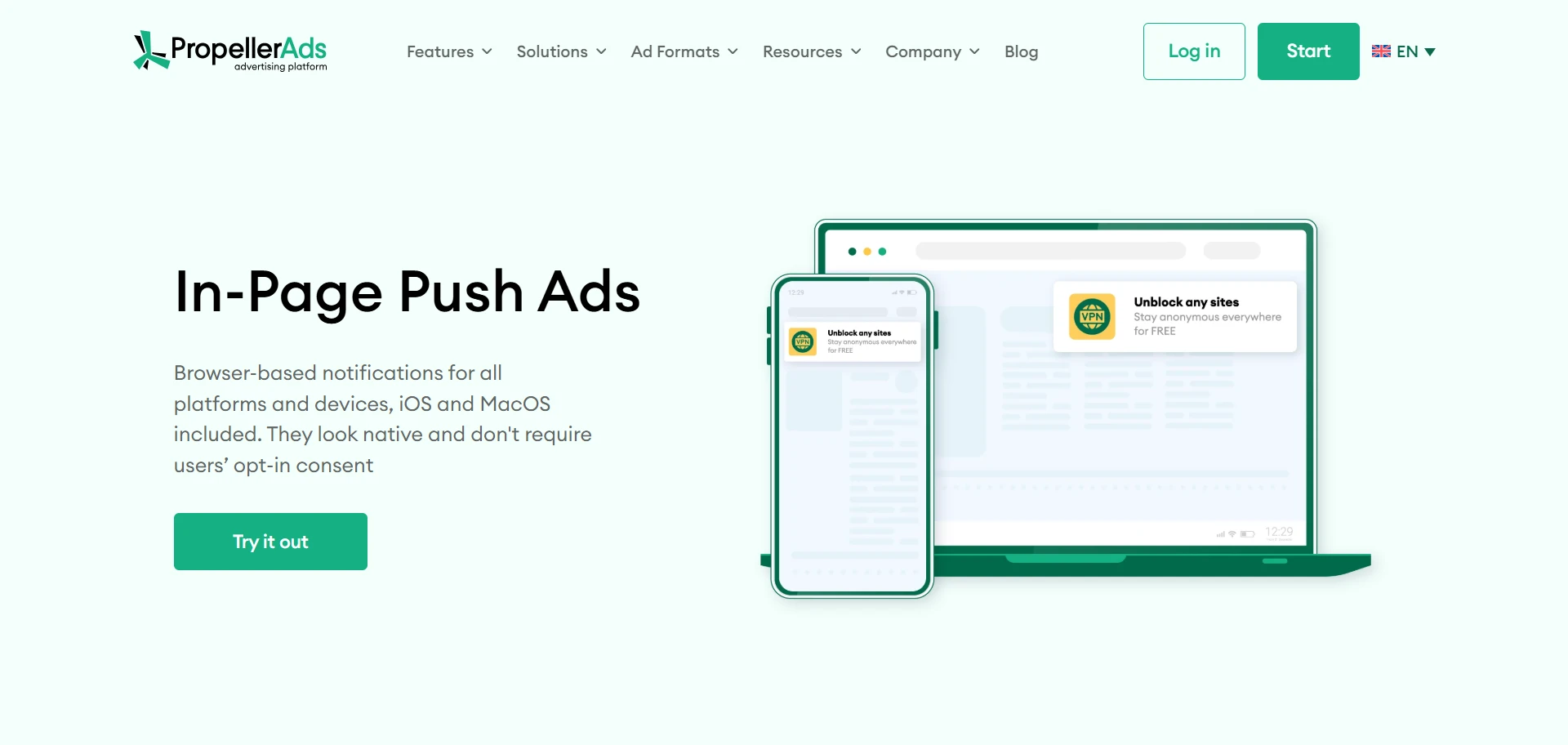
PropellerAds has been around since 2011 and has grown into a well-known name in performance-based advertising. The network currently reaches over 1.5 billion monthly users and registers more than 12 billion ad impressions daily, covering 195 GEOs across the globe. That kind of scale gives publishers access to a steady and diverse pool of demand, which generally translates into healthy fill rates and competitive earnings.
The platform supports multiple ad formats, including push notifications, in-page push, popunders, onclick ads, interstitials, and even Telegram ads, which is a relatively newer addition that not many networks offer yet. For push specifically, the in-page push format works across all devices and platforms, including iOS and MacOS, removing the subscriber requirement and expanding the audience that publishers can monetise.
PropellerAds runs on a self-serve model, so publishers can sign up, get approved quickly, and start placing ads without any lengthy onboarding process. The platform is also known for having no minimum traffic requirement, which makes it accessible for newer websites that are still building their audience. Experienced publishers will find the advanced targeting and AI-powered optimisation tools useful for squeezing more out of their campaigns.
Payment terms are fairly flexible. The minimum payout starts at just $5 for PayPal, making it a practical option for smaller publishers who cannot afford to wait for high earning thresholds before getting paid. Payments are processed weekly, and the platform supports several payment methods, including PayPal, Payoneer, Skrill, WebMoney, and wire transfer.
PropellerAds also has a reliable support team available to help with campaign setup, optimisation questions, and any technical issues that come up along the way. The platform is straightforward to navigate, and its anti-fraud system actively filters out invalid traffic to keep the inventory clean for both sides.
3) PushEngage
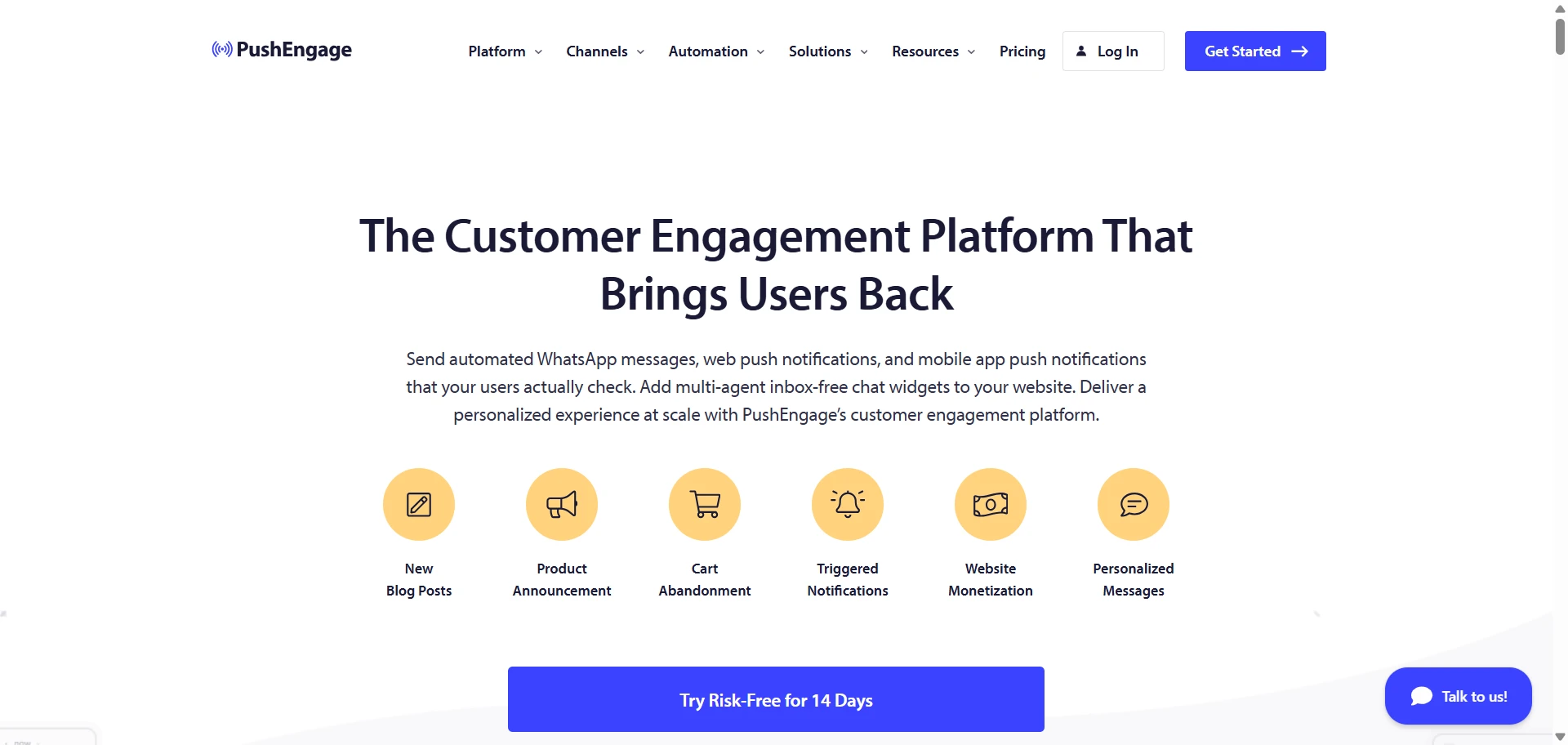
PushEngage is a well-established push notification platform that has earned the trust of over 25,000 businesses, ranging from small bloggers to large ecommerce operations. Rather than functioning purely as an ad network, PushEngage sits more on the marketing automation side of push notifications, giving publishers and site owners the tools to build, grow, and engage their own subscriber base directly.
The platform supports web push, app push, and WhatsApp notifications, making it a solid choice for businesses that want to reach their audience across more than one channel. For publishers specifically, PushEngage makes it easy to automate notification campaigns based on user behavior, meaning notifications go out at the right time without requiring manual effort every time. Features like drip campaigns, cart abandonment recovery, price drop alerts, back-in-stock notifications, and RSS auto-push for new blog posts all run on autopilot once set up.
Setting up PushEngage does not require any coding knowledge. The platform integrates natively with WordPress and WooCommerce, and also works with Shopify, HubSpot, and Salesforce, among others. For WordPress users in particular, the setup is fairly quick and the campaign management can be handled directly from the post editor without switching between dashboards.
PushEngage offers a free plan that supports up to 200 subscribers and 30 campaigns per month, which is useful for testing the platform before committing. Paid plans start at around $9 per month and scale based on subscriber count, with the Business plan covering up to 50,000 subscribers with unlimited campaigns. For larger publishers, the Enterprise plan includes dedicated support, onboarding assistance, unlimited sites, and advanced features like smart cart abandonment and custom-triggered campaigns.
For publishers running high-traffic content sites, PushEngage also offers a Publisher Partner program that provides additional support and tools tailored to driving repeat visits and audience retention rather than one-off traffic.
4) Bidvertiser
BidVertiser has been in the digital advertising space since 2003, making it one of the older and more established networks on this list. Over the years, it has grown into a self-serve platform that now works with over 78,000 publishers and delivers around 450 million ad impressions daily across 196 countries. It supports a range of ad formats, including push notifications, native ads, popunders, direct ads, slider ads, and XML feeds, covering both desktop and mobile traffic.
For advertisers running push notification campaigns, BidVertiser operates on a CPC model with bids starting as low as $0.003 per click. The platform supports both mainstream and adult traffic, giving advertisers flexibility depending on the nature of their campaigns. The targeting options are solid, covering geographic location, device type, operating system, browser, and cell carrier, which makes it easier to reach a specific audience rather than casting too wide a net.
The platform is self-serve with an intuitive interface, so setting up a campaign does not take long. BidVertiser also includes useful tools like a Traffic Estimator that shows estimated daily ad requests and minimum bids per country before launching, as well as subID whitelisting and blacklisting to help refine traffic sources over time.
For publishers, BidVertiser stands out with its dual earning model. Revenue is generated not just from ad clicks but also from conversions, meaning publishers earn additional income when a clicked ad results in a sale or action. The minimum payout threshold sits at just $10 for PayPal and Bitcoin, which is useful for smaller publishers who want quicker access to their earnings. The platform is also fully compatible with AdSense, so it can run alongside existing monetisation setups without conflict.
Ad safety is handled through a combination of in-house monitoring and third-party scanning tools, keeping the ad environment clean for both publishers and advertisers.
5) Adcash
Adcash has been operating in the digital advertising space since 2007 and has built a strong presence over the years, now reaching over 200 million unique users daily across 195 countries. The platform processes over 300 billion ad requests monthly and connects advertisers with publishers through both its own exclusive direct supply and over 100 trusted RTB partners.
It is worth noting that Adcash no longer supports classic web push notification ads. However, the platform does offer in-page push ads, which function similarly and tend to perform well since they appear directly on the publisher’s website and do not require any user subscription. This makes the format accessible to a broader audience, including iOS users who are typically excluded from traditional push notification campaigns.
Beyond in-page push, Adcash supports a range of other formats, including popunder ads, interstitial ads, display banners, native ads, and video ads. Interstitials occupy the full screen during natural page transition moments, making them difficult to ignore without being overly disruptive to the browsing experience.
For publishers, the Autotag feature simplifies the integration process considerably. Rather than setting up separate ad codes for each format, a single piece of code placed on the site automatically serves three high-performing formats at once, typically popunder, interstitial, and in-page push. This saves time and removes the need for manual format testing.
The platform includes a CPA Target bidding tool that automates campaign optimization. Publishers and advertisers simply set a target cost per conversion, and the system handles traffic allocation in the background, shifting spend toward better-performing sources automatically. The Auto Rules feature works alongside this, continuously adjusting bids in real time based on live performance data.
Adcash has no minimum traffic requirement for publishers, making it accessible to smaller sites as well. The minimum payout threshold starts from $5, depending on the payment method, and payments can be requested monthly, bi-weekly, or weekly.
6) Taboola
Taboola is a well-known name in the native advertising space and has grown into a large-scale platform that now reaches approximately 600 million daily active users across more than 9,000 publisher sites worldwide. Publishers like NBC News and Yahoo work with Taboola, and the platform is expected to pay out over $1.5 billion to publishers and OEMs in its current financial year, which gives a sense of the scale it operates at.
For publishers focused on push notifications, Taboola offers a dedicated product called Taboola Push. This tool lets publishers send personalised web push notifications directly to subscribers’ desktop or mobile browsers, even when they are not actively on the site. What sets it apart from basic push tools is the level of personalisation involved. Taboola’s algorithm uses over 100 different audience signals to determine what content to send to each subscriber, making the notifications feel relevant rather than generic. Publishers can also send manual alerts for breaking news or time-sensitive content directly through the Newsroom platform.
The results from publishers using Taboola Push have been notable. The Independent, for example, grew its push subscriber base from 46,000 to over one million in just seven weeks after switching to the platform. Push traffic from the integration went on to account for 2% of the publication’s total audience traffic.
Beyond push, Taboola’s ad platform, called Realise, gives publishers access to performance advertising demand across native, display, vertical, carousel, and other formats. The platform is powered by AI that draws on over 17 years of publisher data to match users with relevant ads, which generally leads to stronger engagement and better revenue outcomes for publishers.
Taboola works best for mid-to-large publishers with established audiences. Smaller sites may find it harder to get started, given that the platform tends to work through account managers rather than a fully self-serve signup process. For publishers that do qualify, it brings a strong combination of monetisation tools, audience engagement features, and a massive global advertiser base.
7) PopAds
PopAds has been running since 2010 and has established itself as a dedicated popunder ad network with a strong global footprint. The platform processes over 2 billion ad views daily across more than 200 countries, making it a reliable option for publishers looking to monetize traffic through the popunder format specifically.
The way popunder ads work is fairly simple. When a visitor clicks anywhere on a webpage, an ad opens in a new browser window behind the active tab. The visitor only sees it when they close or minimize their current window, which makes it less intrusive than a traditional pop-up while still capturing attention. PopAds focuses exclusively on this format and has refined it well over the years.
For publishers, the platform gives a good level of control over how ads appear on their site. Publishers can set their own minimum bid, meaning they decide the lowest price they are willing to accept per ad view. They can also control the frequency at which pop-ups are shown to a single visitor per day, and opt out of showing ads with autoplaying sound or video if that does not suit their audience. These settings allow publishers to balance revenue with user experience rather than accepting whatever the network defaults to.
Traffic quality is taken seriously on the platform. PopAds uses its own AdScore technology to maintain a clean traffic rate, filtering out bots and fraudulent sources before they affect publisher earnings. Every publisher on the network goes through a verification process, and advertisers benefit from knowing the traffic they are buying is coming from real human visitors.
Payment terms are notably fast. PopAds processes payouts daily as long as the account balance has reached the minimum threshold of $10. Supported payment methods include PayPal, Bitcoin, and bank transfer, with processing times varying by method. Publishers also earn a 10% referral commission on the earnings of anyone they bring to the platform.
The pricing model is straightforward, based on CPM, meaning publishers earn based on the number of ad views rather than clicks or conversions. CPM rates for US and UK traffic tend to be competitive, and the platform covers advertisers from over 40 countries, including major Tier 1 markets across North America, Western Europe, and Australia.
8) Sovrn
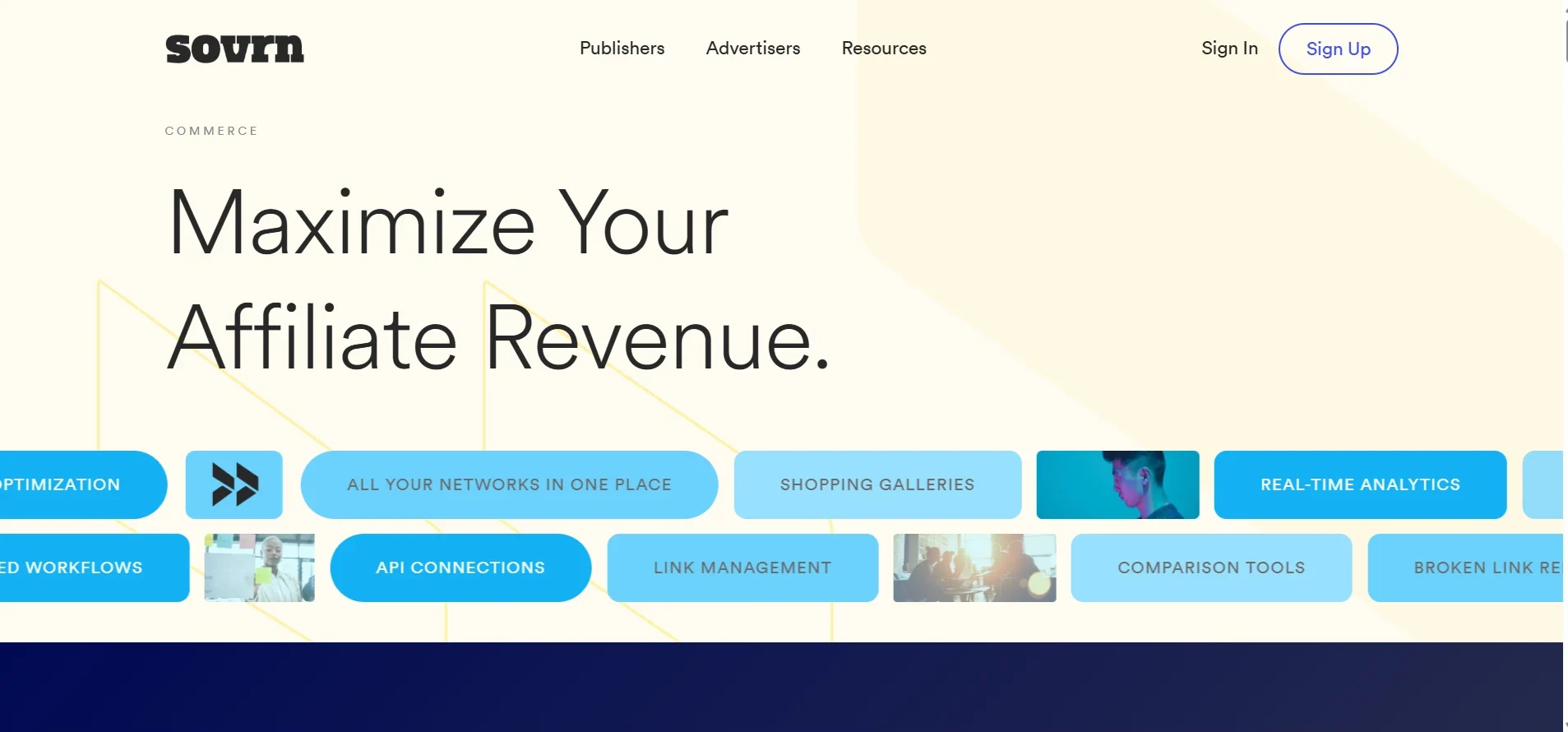
Sovrn is a publisher technology platform based in Boulder, Colorado, that has been operating since 2014 and has grown into a fairly comprehensive monetization solution for publishers and content creators. The platform currently serves over 80,000 websites, mobile apps, and CTV channels, reaching over 500 million active consumers daily and processing more than 40 billion page views every day.
Sovrn Commerce is the affiliate and commerce side of the platform, designed to help publishers earn through affiliate links rather than traditional display ads. It connects publishers to a network of over 50,000 merchants, and the platform automatically optimizes affiliate links to route clicks toward the merchant offering the highest earnings per click at any given time.
This means publishers do not have to manually manage multiple affiliate programs to get the best rates. The platform also includes a price comparison tool and automatic redirect to alternative retailers when a merchant does not offer a commission, so earning opportunities are not lost even when a specific merchant link falls short.
For publishers who run content across multiple affiliate networks, Sovrn Commerce Unified brings everything together in one place, simplifying link creation and providing automated features like stock availability and price comparison across networks.
Beyond affiliate commerce, Sovrn also offers an Ad Exchange, ad management services, and data monetization tools. The Ad Exchange gives publishers access to programmatic demand from top-tier advertisers, while the ad management service can be run either as a fully managed option with a dedicated team or as a self-serve setup, depending on what the publisher prefers. Both come with real-time reporting and analytics.
Sovrn also recently launched Signal Vitals, a programmatic and inventory health dashboard that gives publishers a clearer view of how their ad inventory is performing and where improvements can be made. For publishers navigating the shift toward AI-driven search and content consumption, Sovrn has also partnered with AI monetization platforms to help publishers earn from conversational ad placements within AI-powered experiences on their sites.
There is no minimum traffic requirement to join, making it accessible to smaller publishers. Payment is processed on a NET 30 basis, with a minimum payout threshold of $25 via PayPal or wire transfer.
9) RevenueHits
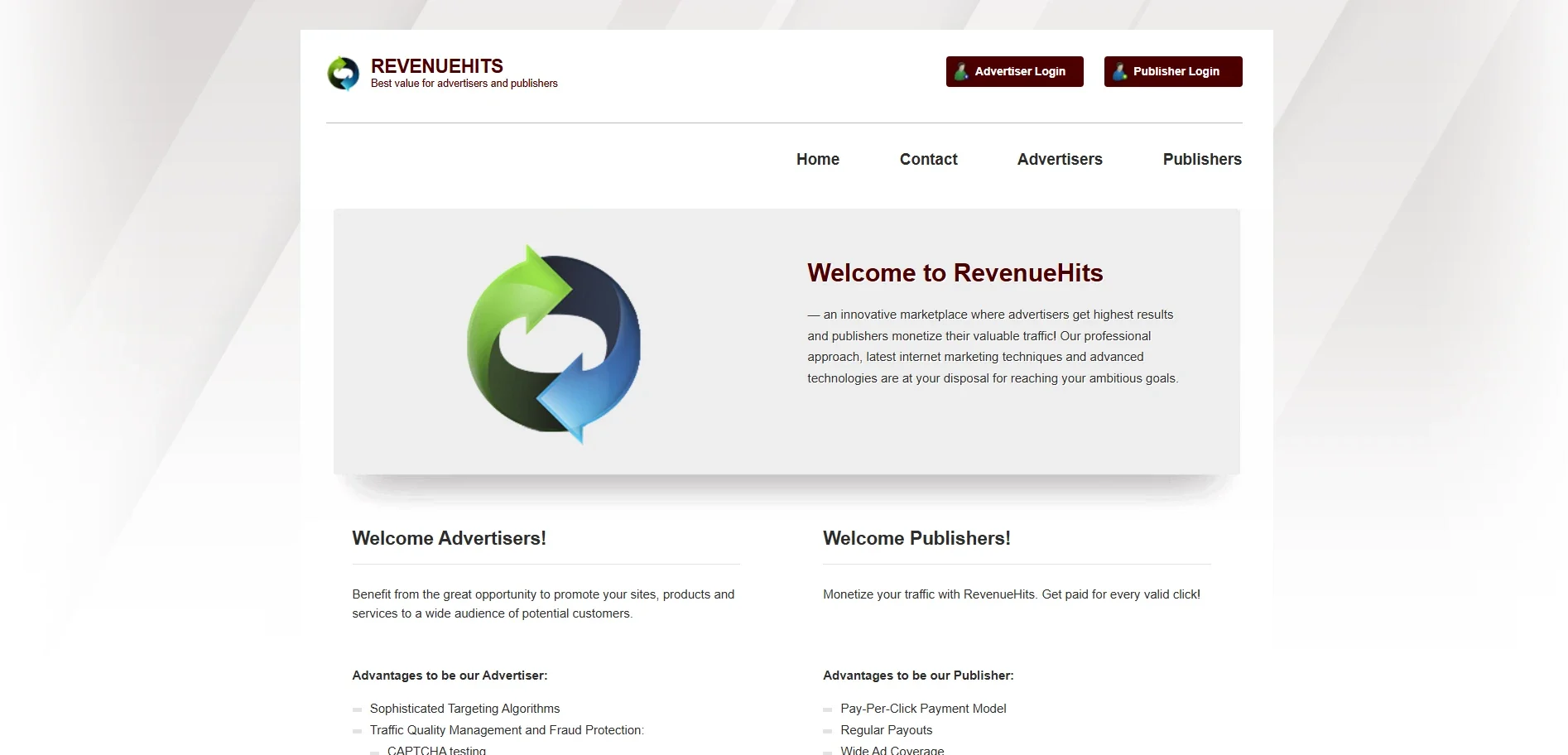
RevenueHits may not be the most talked-about name in the push notification space, but it has quietly built a solid reputation among publishers who are looking for a straightforward, no-fuss monetization platform. The network works with over 20,000 publishers and more than 5,000 advertisers, and it is open to publishers of all sizes with no minimum traffic requirement needed to get started.
The platform primarily operates on a CPA (cost per action) model, which means publishers earn when users complete a specific action such as signing up, filling out a form, or downloading an app. This differs from the standard CPM or CPC models used by most other networks. While this model requires quality, engaged traffic to perform well, it can result in higher payouts per conversion compared to impression-based earning. RevenueHits also promises a 100% fill rate across all geographic regions, which means ad placements on the publisher’s site will always be occupied regardless of the visitor’s location.
The dashboard is clean and easy to navigate, which makes managing placements and monitoring performance fairly simple even for newer publishers. It does not feel overwhelming, and the reporting tools give publishers a clear enough view of how their ad units are performing on a day-to-day basis.
Ad compliance is handled internally by the network’s own compliance team, which reviews ads before they go live. This takes the burden of policing ad quality off the publisher’s plate, allowing them to stay focused on content and traffic rather than worrying about whether ads on their site meet quality or legal standards.
10) SmartyAds
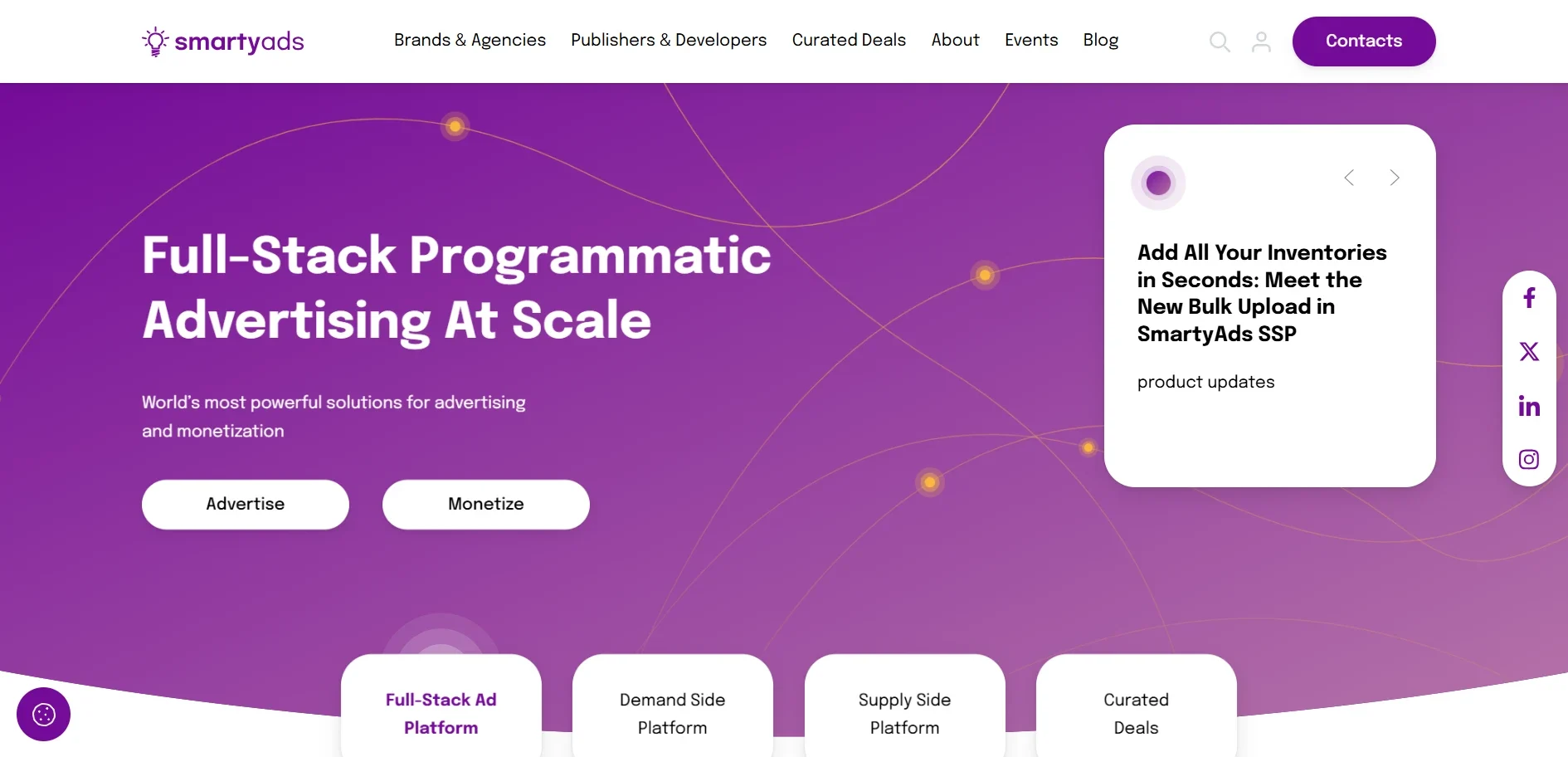
SmartyAds has been building programmatic advertising technology since 2013 and has developed into a full-stack ad tech platform that covers the entire media trading cycle. The company offers a demand-side platform (DSP) for advertisers and media buyers, a supply-side platform (SSP) for publishers, and a real-time bidding ad exchange that connects both sides. This makes it a fairly self-contained ecosystem rather than just another ad network.
For publishers, the SmartyAds SSP is the entry point. It gives publishers access to a broad range of demand sources, including preferred deals, private marketplace deals, ad networks, and direct DSP connections, all managed through a single dashboard. The platform uses header bidding technology across desktop, mobile web, and in-app environments, which helps publishers uncover the true value of each impression and drive higher eCPMs compared to standard waterfall setups. There are no minimum traffic requirements to get started, which keeps the platform accessible to publishers at various stages of growth.
Ad formats supported include push notifications, in-page push, interstitial ads, popunders, display banners, native ads, video ads, connected TV (CTV), and even digital out-of-home (DOOH) placements, making it one of the more format-diverse platforms on this list. The platform also supports animated and rich media creatives, giving advertisers more flexibility in how they present their campaigns.
On the media buying side, SmartyAds DSP operates on CPM and CPC pricing models, with CPC currently available specifically for push notification campaigns. Advertisers get access to AI-powered bid optimization, contextual targeting, and cross-channel campaign management across mobile, desktop, and connected TV. The platform integrates with anti-fraud providers and follows IAB standards, including ads.txt and sellers.json verification, keeping traffic quality in check.
Top traffic-generating countries on the platform include the US, UK, India, Canada, and Israel, which makes it a reasonable choice for publishers and advertisers targeting high-value Tier 1 audiences. The minimum payout threshold for publishers sits at $50, with payments processed on a NET 60 basis. Supported payment methods include PayPal, Payoneer, Skrill, WebMoney, bank wire, and ePayments.
How to Choose a Suitable Push Ad Network?
With so many push ad networks available today, picking the right one can feel like a difficult decision. The good news is that narrowing it down becomes much easier when you focus on a few key factors that directly affect how well your campaigns will perform and how smoothly the platform will fit into your workflow.
Payment Model
The pricing model a network uses should align with what you are actually trying to achieve. If your goal is building brand awareness and reaching as many people as possible, a CPM-based network makes more sense since you pay per thousand impressions rather than per click or action. CPM campaigns tend to generate a higher volume of exposure for the budget spent, and when the creative is strong, those impressions naturally translate into clicks as well.
Whatever model you choose, transparency in pricing is non-negotiable. The network should clearly display current CPM rates, available traffic volumes by region, and suggested bids for different campaign goals. Trying to plan a campaign without access to this data upfront is a guessing game, and reputable networks understand that publishers and advertisers need this information before committing.
Traffic Quality
Not all traffic is equal, and this is where many publishers and advertisers run into problems if they are not careful. A good push ad network should have active systems in place to detect and filter out bot traffic, invalid clicks, and fraudulent impressions before they affect campaign results or publisher earnings. Look for networks that use dedicated traffic safety tools, ideally combining automated scanning with manual review, to keep the inventory clean on both sides. This protects advertisers from wasted spend and ensures publishers are connected to genuine, paying demand.
Platform Features
The features a network offers can make the difference between a campaign that performs well and one that requires constant manual effort to keep on track. At a minimum, the platform should provide solid targeting options covering geography, device type, operating system, browser, and connection type. Beyond that, flexible bidding configuration and clear budget control tools are important for managing spend without surprises.
It is also worth checking how user-friendly the interface is. A platform with powerful features but a confusing dashboard ends up slowing things down rather than helping. The best networks make it easy to set up campaigns, adjust targeting, monitor performance in real time, and make changes without needing to go through a support ticket every time.
Customer Support
Good customer support matters more than people often realize, especially when something goes wrong mid-campaign or during the initial setup phase. Look for a network that offers multiple ways to get in touch, whether that is live chat, email, or a dedicated account manager. Response times should be reasonable, and the support team should have enough product knowledge to actually help resolve issues rather than just forwarding queries to someone else. For larger publishers or advertisers running high-volume campaigns, having a dedicated point of contact is a meaningful advantage that can save a significant amount of time over the course of a campaign.
Also Read,
Frequently Asked Questions
1. What is a push notification ad network?
A push notification ad network is a platform that connects publishers and advertisers through a consent-based ad format. Publishers add a subscription prompt to their website, and once visitors opt in, they become part of an audience that can be served ads directly on their browser or device. The network manages the buying and selling of this inventory, typically in real time, giving both parties access to targeting tools, reporting dashboards, and payment processing through a single platform.
2. Are push notification ads effective for publishers?
Push notification ads tend to perform well for publishers because the audience receiving them has already opted in, which means engagement rates are generally higher compared to standard display formats. Publishers also benefit from the fact that revenue can be earned from subscribers even after they have left the site, creating a passive income stream that runs in the background without requiring additional traffic efforts.
3. Do I need a large website to join a push ad network?
Not necessarily. Several networks on this list, including PropellerAds, RevenueHits, PopAds, and SmartyAds, have no minimum traffic requirements, making them accessible to newer or smaller publishers. Some networks do prefer established sites with consistent traffic, so it is worth checking the specific requirements of any network before applying.
4. Which pricing model is better for push notification ads, CPM or CPA?
It depends on your goal. CPM works well when the objective is reaching a broad audience and building visibility, since you pay based on impressions regardless of user actions. CPA is better suited for performance-driven campaigns where you only pay when a specific action, like a sign-up or download, is completed. For publishers, CPM tends to provide more predictable earnings, while CPA can generate higher payouts when the audience is highly engaged and likely to convert.
5. Can push notification ads run alongside Google AdSense?
In most cases, yes. Many publishers run push notification ads from networks like PropellerAds, BidVertiser, and RevenueHits alongside AdSense without any conflict, since push notifications occupy a separate channel from standard display ad placements. However, it is always advisable to review the terms of service of both AdSense and the push network you intend to use, as some formats, like popunders, may create compliance issues depending on how they are implemented on your site.
Conclusion: Which is the Best Push Notification Ad Network?
All the push notification ad networks on this list have earned their place through consistent performance, reliable payouts, and the trust of publishers and advertisers worldwide. Each one brings something slightly different to the table, whether that is a specific ad format, a particular pricing model, or a strength in certain geographies or verticals.
The right choice will ultimately come down to your specific goals. A publisher focused on maximizing revenue from high-volume traffic will have different priorities than an advertiser running a targeted performance campaign in a specific region. Before settling on a network, it is worth evaluating the targeting options available, the transparency of pricing and bid data, the quality of traffic the network delivers, and the level of support you can expect when you need it.
That said, if you are looking for a well-rounded starting point that covers the most ground across all these areas, Adsterra is worth serious consideration. The platform balances ease of use with a solid set of features, supports multiple ad formats beyond just push notifications, maintains strong traffic quality standards, and gives publishers access to a large and diverse advertiser base. It works reasonably well whether you are just getting started with push monetization or looking to scale an existing setup.
At the end of the day, the best approach is to test a few networks that align with your goals, track the results carefully, and let the data guide your decision. The options on this list give you a strong foundation to start from.
