

The online course industry in 2026 looks very different from what it did just a few years ago. What began as a creator-led movement of video lessons and PDFs has matured into a global education economy. Today, serious course creators are no longer just selling content; they are building academies, training ecosystems, and long-term learning businesses. That shift explains why all-in-one platforms like LearnWorlds and Kajabi continue to dominate conversations in edtech circles.
Both platforms promise simplicity, scale, and the ability to run an online education business without stitching together dozens of tools. Yet their philosophies diverge in meaningful ways. LearnWorlds positions itself as a powerful, education-first learning management system built for deep, interactive learning experiences and long-term growth. Kajabi, by contrast, has always leaned heavily into marketing, funnels, and digital product sales, appealing to creators who prioritize selling over structured learning.
The goal of this comparison is simple: to offer a clear, experience-driven head-to-head look at LearnWorlds and Kajabi in 2026, highlighting where each platform shines and where one clearly outpaces the other for most users. By the end, one platform emerges as the stronger, more future-proof choice for the majority of educators and course businesses.
Overview of LearnWorlds
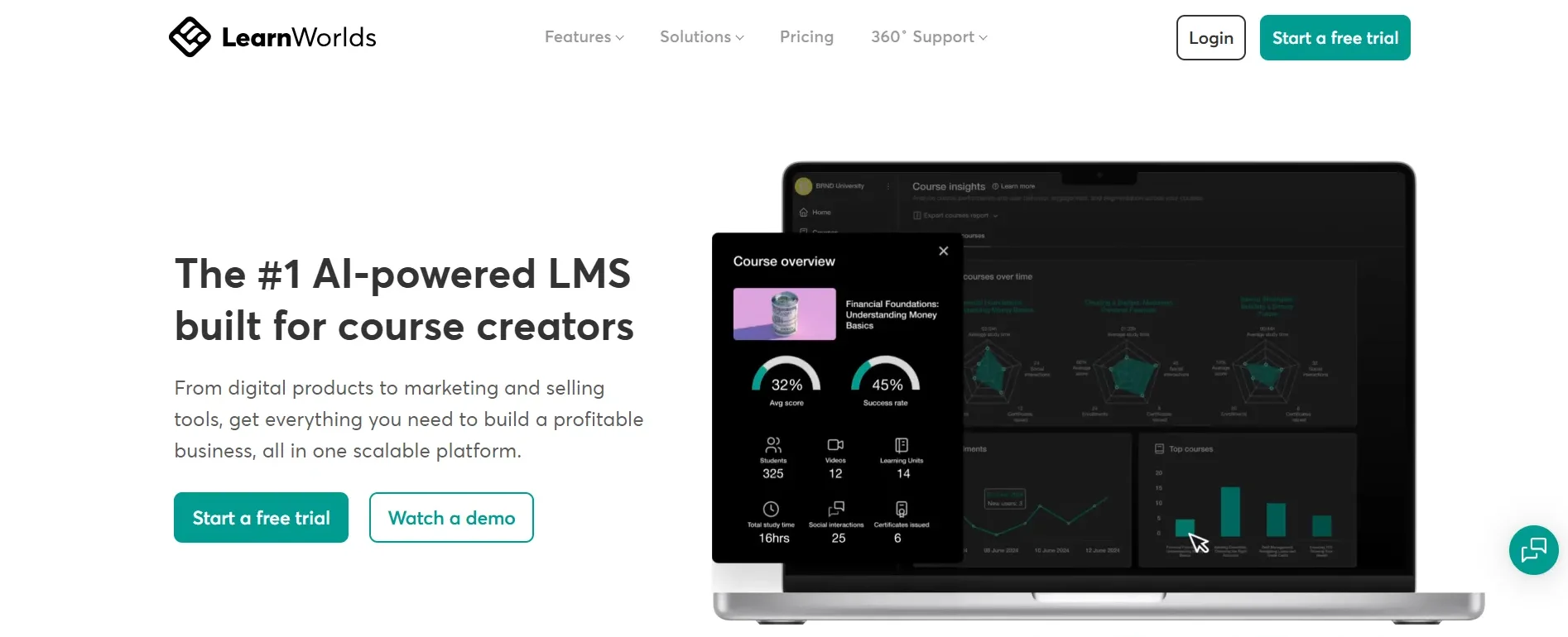
LearnWorlds is best understood as a platform designed by people who deeply understand education, not just online sales. Its core strength lies in how seriously it treats the learning experience itself. From the moment you start building a school, it’s clear the platform is optimized for educators, trainers, coaches, and businesses that care about outcomes, engagement, and measurable progress.
One of LearnWorlds’ defining features is its emphasis on interactive learning. Courses are not limited to passive video consumption. Instead, creators can design experiences that include interactive video elements, in-depth assessments, assignments, certificates, graded activities, and digital textbooks. In 2026, LearnWorlds further expanded its AI-powered tools, helping creators generate structured outlines, assessments, and learning paths while still allowing full pedagogical control.
Flexibility is another major advantage. LearnWorlds supports a wide range of use cases, from solo creators launching their first academy to enterprises running multiple branded schools for different audiences. It feels less like a “course platform” and more like a customizable education infrastructure that grows with you.
Do check out our detailed LearWorlds Review.
Overview of Kajabi
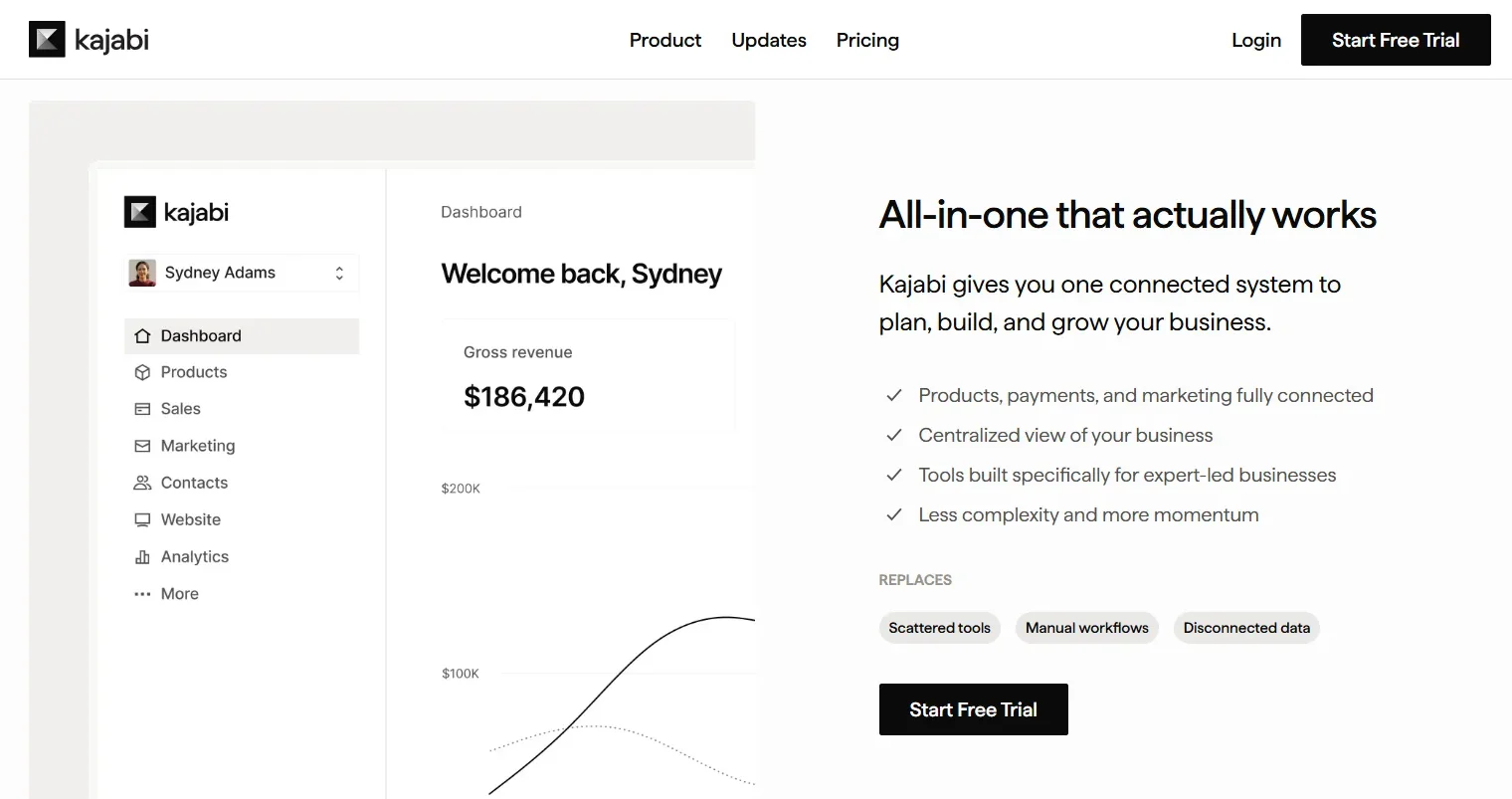
Kajabi has long been a favorite among non-technical creators who want to launch quickly and sell digital products with minimal friction. Its strength lies in its ease of use and its tightly integrated marketing ecosystem. For someone selling simple courses, memberships, or coaching programs, Kajabi can feel refreshingly straightforward.
The platform shines in sales pages, email marketing, funnels, and basic community features. Kajabi’s interface is polished, and many creators appreciate how quickly they can go from idea to launch without worrying about integrations. In 2026, Kajabi continues to serve digital entrepreneurs who see education primarily as a product rather than a structured learning journey.
That said, Kajabi’s simplicity comes with trade-offs. When educational depth, learner assessment, or complex training structures become important, the platform starts to feel limited. Kajabi works best when content delivery is straightforward, and marketing is the main engine of growth.
Pricing Comparison
Pricing remains one of the biggest differentiators in the LearnWorlds vs. Kajabi debate. In 2026, LearnWorlds continues to offer better value and scalability, especially for growing education businesses.
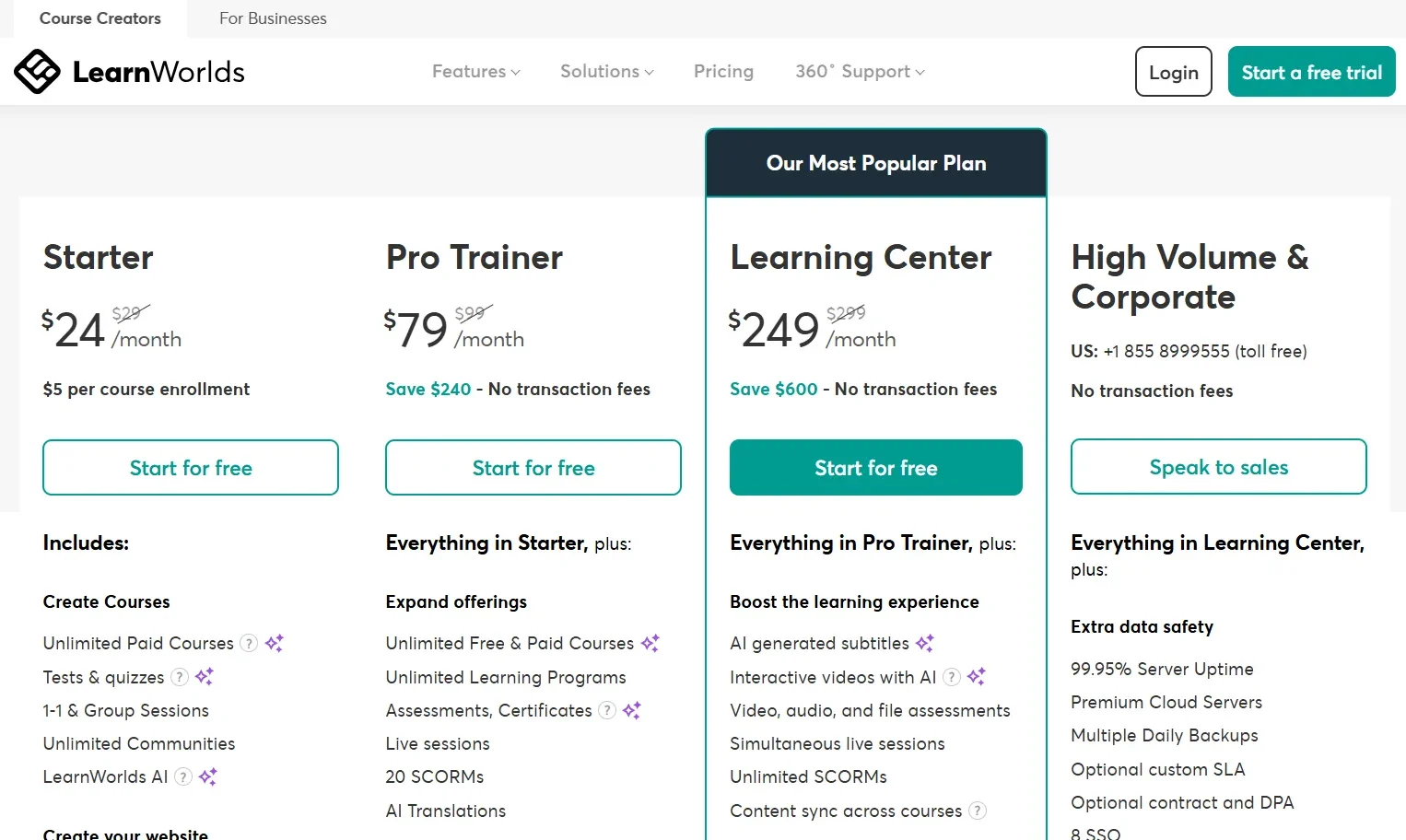
LearnWorlds pricing plans start at a more accessible level, allowing creators to launch a fully functional online school without high upfront costs. Even entry-level plans include robust course tools, essential marketing features, and analytics. As businesses grow, higher-tier plans unlock advanced automations, branded mobile apps, and enterprise features, often with unlimited courses and learners and minimal or no transaction fees.
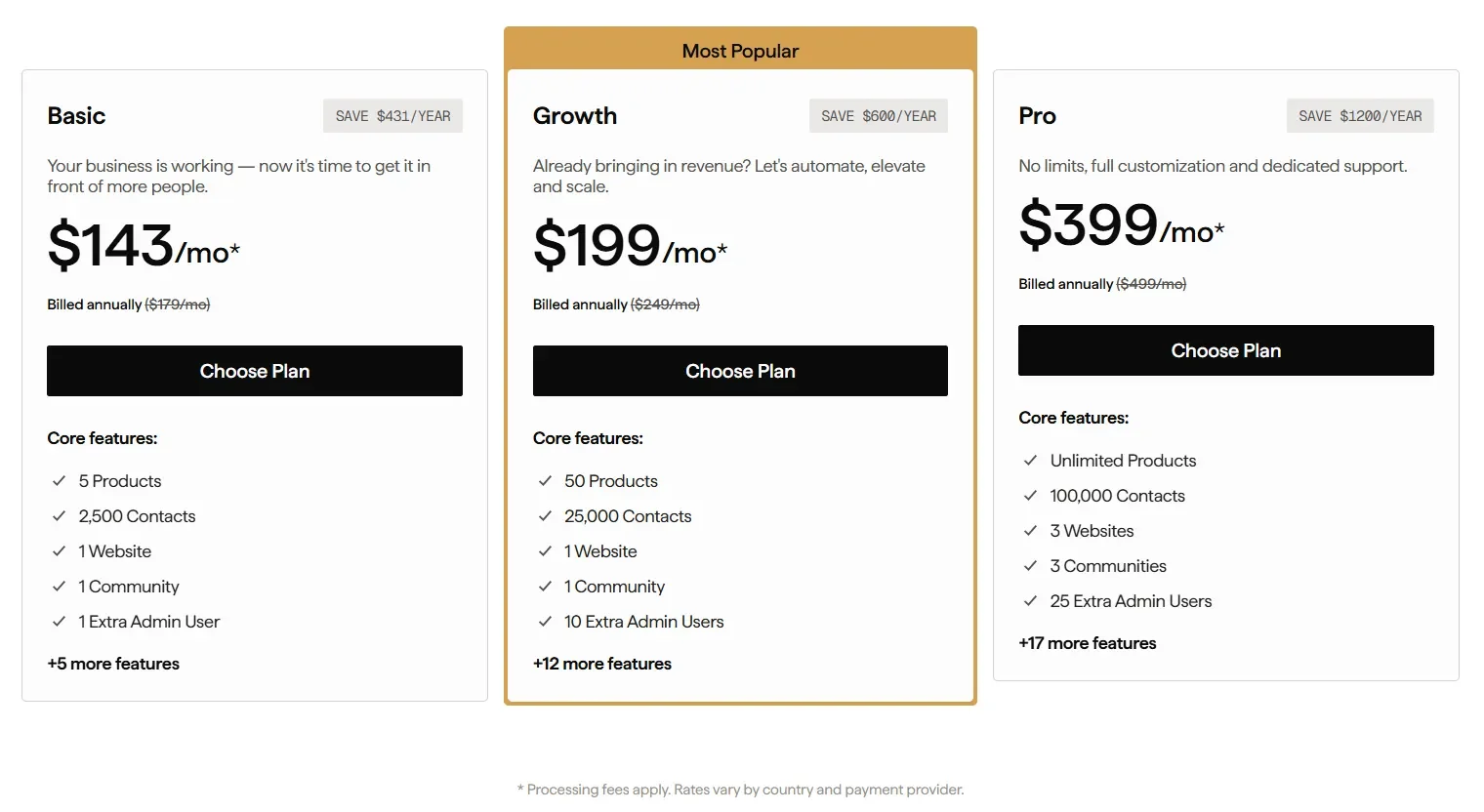
Kajabi pricing, by contrast, remains on the higher end of the market. Entry plans are more expensive and often include caps on products, contacts, or active members. As your audience grows, these limitations can force you to upgrade to significantly more expensive plans. While Kajabi avoids transaction fees, its high monthly costs can restrict long-term scalability.
From a cost-to-value perspective, LearnWorlds consistently delivers better long-term ROI.
Course Creation and Learning Experience
This is where the difference between the two platforms becomes most pronounced. LearnWorlds is built around the idea that learning should be active, measurable, and engaging. Imagine launching an interactive training academy where learners don’t just watch videos but actively participate through quizzes embedded inside videos, assignments that require reflection, and certificates tied to real achievement. LearnWorlds makes that kind of experience not only possible but intuitive.
The platform supports interactive videos, advanced quizzes, assignments, gradebooks, and even SCORM and HTML5 content, all of which are crucial for corporate training and professional education. Its AI tools assist with educational design rather than replacing it, helping instructors create structured, outcome-driven courses. Gamification elements, learner analytics, and completion tracking all work together to improve engagement and retention.
Kajabi takes a simpler approach. Course creation revolves primarily around videos and text lessons. While this works well for straightforward content delivery, it lacks the depth needed for more sophisticated training programs. Assessments are basic, interactivity is limited, and there is little support for complex instructional design. Kajabi is effective for creators who want to teach concepts quickly, but it falls short for those aiming to deliver immersive or accredited learning experiences.
Website, Branding, and Customization
Branding matters more than ever in 2026, especially as online education becomes more competitive. LearnWorlds excels in this area by offering true white-label capabilities. Creators can fully brand their schools, from domains and emails to learner dashboards and even mobile apps. The result is a professional, cohesive brand experience that feels like a standalone education platform rather than a hosted tool.
LearnWorlds’ site builder is flexible, allowing detailed customization without forcing creators into rigid templates. For businesses and institutions, the ability to offer branded mobile apps has become a major differentiator, strengthening learner engagement and brand loyalty.
Kajabi also provides attractive templates and a smooth website builder, but its white-labeling is more limited. While you can customize the look and feel of your site, Kajabi branding is harder to completely remove, and branded app options are more restricted. For creators who prioritize brand ownership and institutional credibility, this can be a significant drawback.
Marketing, Sales, and Ecommerce
Kajabi’s strongest reputation lies in marketing, and it’s well-earned. Its funnels, email automation, and sales pipelines are tightly integrated and easy to use. For creators who think like marketers first, Kajabi offers a streamlined way to attract leads and convert them into customers.
However, LearnWorlds has closed much of this gap while adding a different kind of advantage. The platform includes coupons, bundles, subscriptions, affiliates, and flexible pricing models that support a wide range of business strategies. More importantly, LearnWorlds emphasizes learner engagement and retention through behavior-based automations. Instead of focusing solely on acquisition, it helps creators keep students active, progressing, and coming back for more.
In practice, this often leads to higher lifetime value. A learner who feels supported, challenged, and engaged is far more likely to enroll in additional programs. LearnWorlds’ marketing tools may feel slightly less flashy than Kajabi’s funnels, but they are better aligned with long-term education businesses than with one-off sales.
Administration, Analytics, and Support
Running a serious online school requires strong administrative tools, and this is another area where LearnWorlds stands out. The platform offers detailed analytics on learner progress, course performance, and engagement patterns. Administrators can manage users at scale, assign roles, and even operate multiple schools from a single account, which is invaluable for growing organizations.
Integrations and security features are robust, supporting both independent creators and enterprise clients. LearnWorlds’ support experience also deserves mention. At higher tiers, users gain access to personalized assistance and even phone support, which remains rare in the industry.
Kajabi’s admin and analytics tools are more limited by comparison. While they are sufficient for basic reporting and user management, they lack the depth required for complex educational operations. Support is reliable but tends to be more standardized, which can feel impersonal for larger or more nuanced use cases.
Pros and Cons
LearnWorlds stands out for its educational depth, affordability, scalability, AI-powered innovation, and learner-focused design. The only real downside is a slightly steeper learning curve, simply because the platform offers so many advanced capabilities.
Kajabi shines in ease of use and marketing automation, making it ideal for quick launches. However, higher pricing, scaling limitations, and limited learning tools make it less suitable for long-term education businesses.
Also, Read –
Conclusion: Why LearnWorlds Wins in 2026
When comparing LearnWorlds and Kajabi in 2026, the choice ultimately comes down to what kind of business you want to build. If your goal is to sell simple digital products with strong marketing funnels, Kajabi can still be a viable option. But for most course creators, educators, coaches, and businesses, LearnWorlds is the clear winner.
LearnWorlds combines powerful learning tools, affordable and scalable pricing, AI-driven innovation, and full white-label control into a platform that prioritizes real educational outcomes. It doesn’t just help you sell courses; it helps you build a sustainable education brand that learners trust and return to.
For anyone serious about online education and future-proof growth, LearnWorlds stands out as the superior platform in 2026. Exploring its free trial or booking a demo is the best way to see how far modern online learning has truly come.
