
Disclosure: Some links in this article are affiliate or sponsored links. If you buy through them, we may earn a commission at no extra cost to you. Our opinions are our own.

Data breaches, credential theft, and unsecured remote logins are some of the biggest risks facing small and mid-sized companies today. Most businesses cannot afford to build a private network from scratch, so a business VPN has become the practical middle ground. It encrypts traffic between remote employees and company systems, hides your team’s real IP addresses, and gives IT admins a way to manage access from one dashboard.
Not every VPN is built for this job. Consumer VPNs are designed for streaming and personal browsing, while a true business VPN needs centralized billing, multi-user management, site-to-site connectivity, and a support team that responds fast when something breaks. Below are five providers that handle business use well in 2026, based on their current published pricing, server networks, and admin features.
Quick Comparison
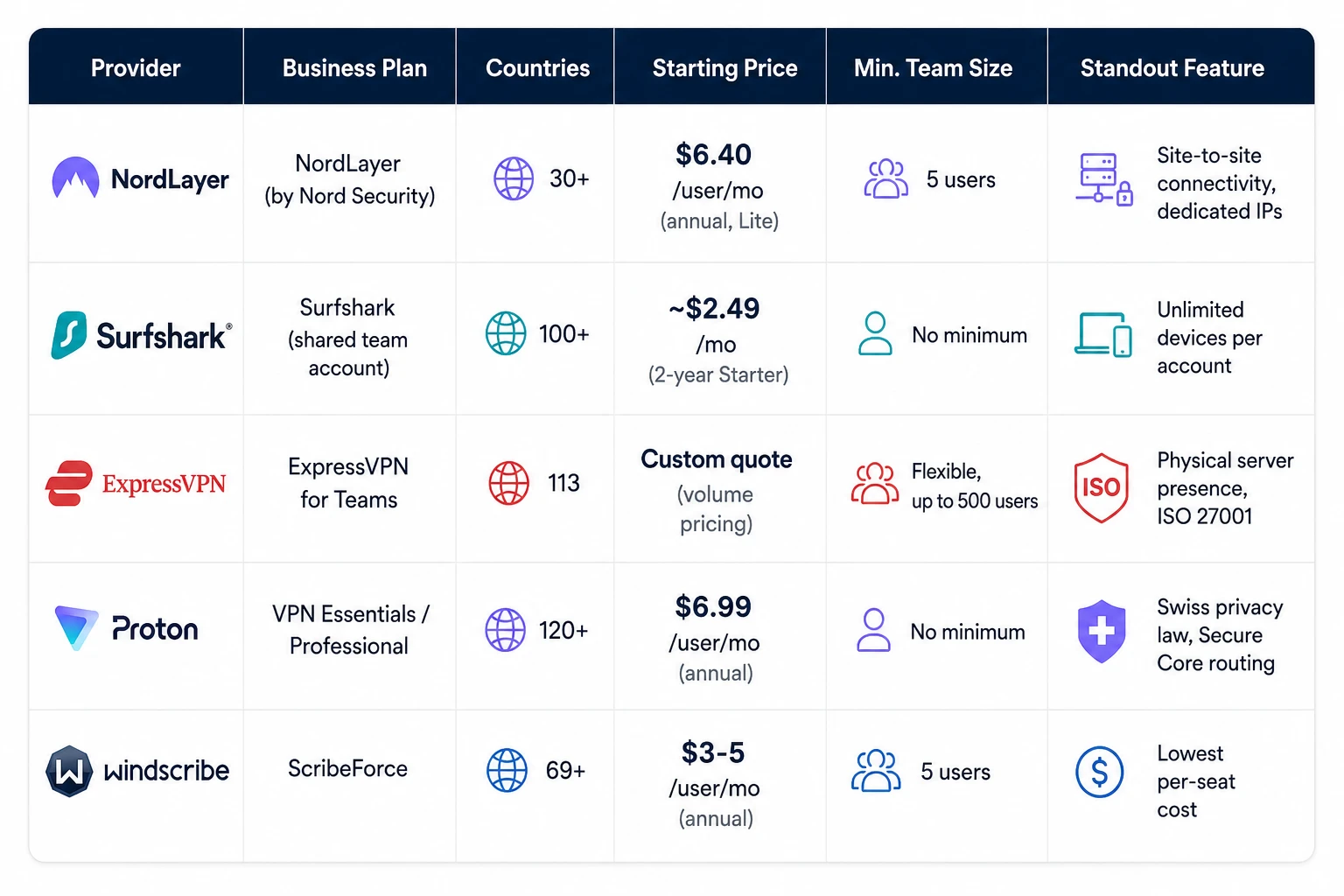
Prices and server counts change often, so treat this table as a snapshot and confirm current numbers on each provider’s pricing page before you commit to a contract.
How we evaluated these VPNs
We compared each provider’s published pricing pages, server and country counts, encryption standards, and admin/management tools as of mid-2026. We also weighed customer support responsiveness, minimum seat requirements, and whether the company offers a dedicated business product or simply lets teams share a consumer plan. None of these providers paid for placement on this list; where we have an affiliate relationship with a provider, it does not affect the ranking.
1. NordLayer
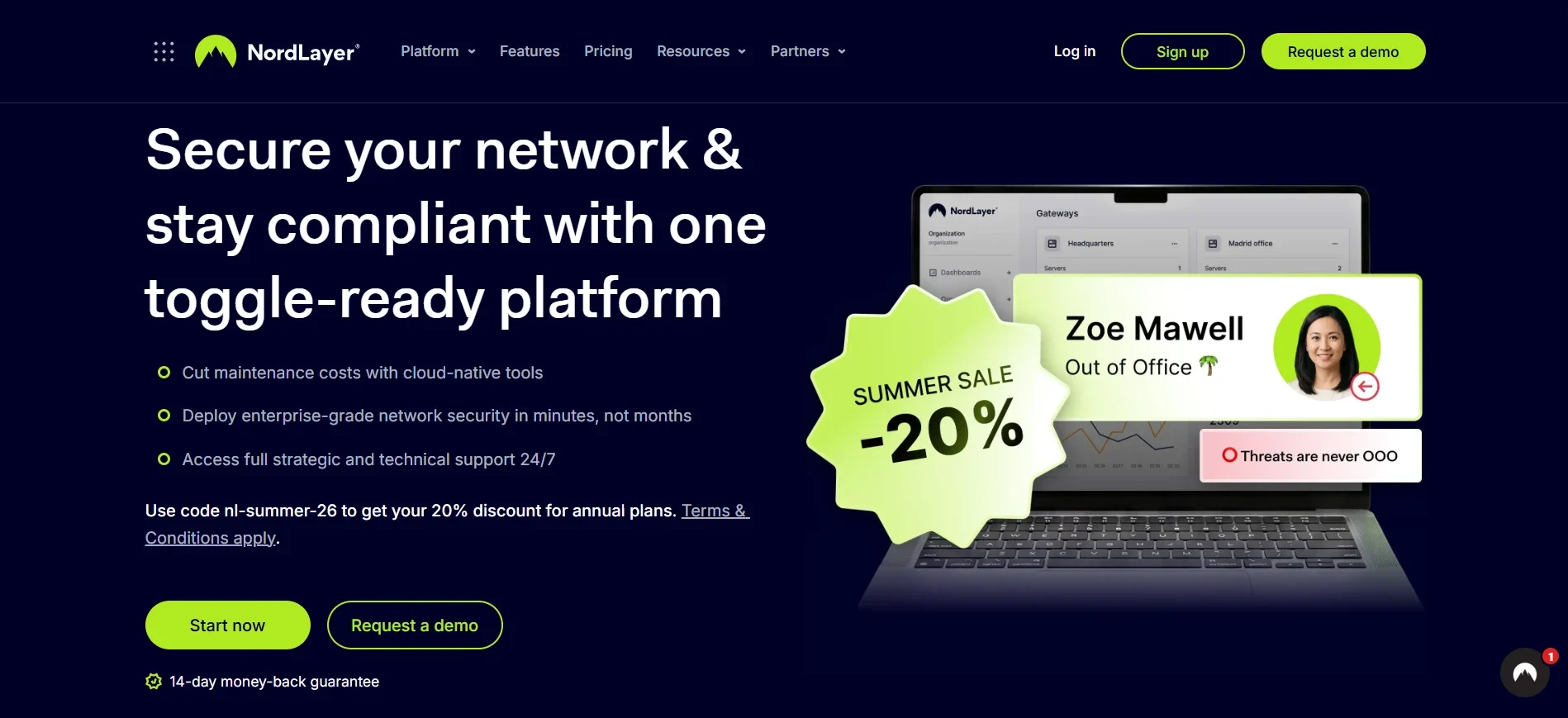
NordLayer is Nord Security’s dedicated business VPN, built separately from the consumer NordVPN app. It targets remote teams that need a stable, centrally managed connection rather than a personal privacy tool.
Pricing: NordLayer runs four tiers. Lite starts at $6.40 per user per month on an annual plan (or $8/month billed monthly), Core is $8.69 per user per month annually, and Premium runs $10.92 per user per month annually. There’s a minimum of 5 users per account, a 14-day money-back guarantee, and dedicated servers with a fixed IP are available as an add-on for around $40 per month.
Countries and servers: NordLayer’s network is smaller than the consumer NordVPN product, covering roughly 30+ countries with physical (not virtual) server locations, which matters for compliance-sensitive teams that need to know exactly where their traffic routes.
Key features:
- Site-to-site connectivity that links multiple office locations under one encrypted network
- Dedicated IPs, single sign-on with Azure AD and Okta, and a cloud firewall (FWaaS)
- AES-256 and ChaCha20 encryption over the NordLynx (WireGuard-based) protocol, plus OpenVPN and IKEv2
- 24/7 live chat support, though initial contact goes through a chatbot before reaching a human agent
Pros: Physical server infrastructure, low 5-user minimum compared to competitors like Perimeter 81, consistent renewal pricing with no post-intro price spike.
Cons: Smaller country count than Surfshark or Proton VPN, per-user pricing adds up fast for larger teams, no free trial (only the money-back guarantee).
Read our full NordVPN review for more on the consumer side of the same company.
2. Surfshark
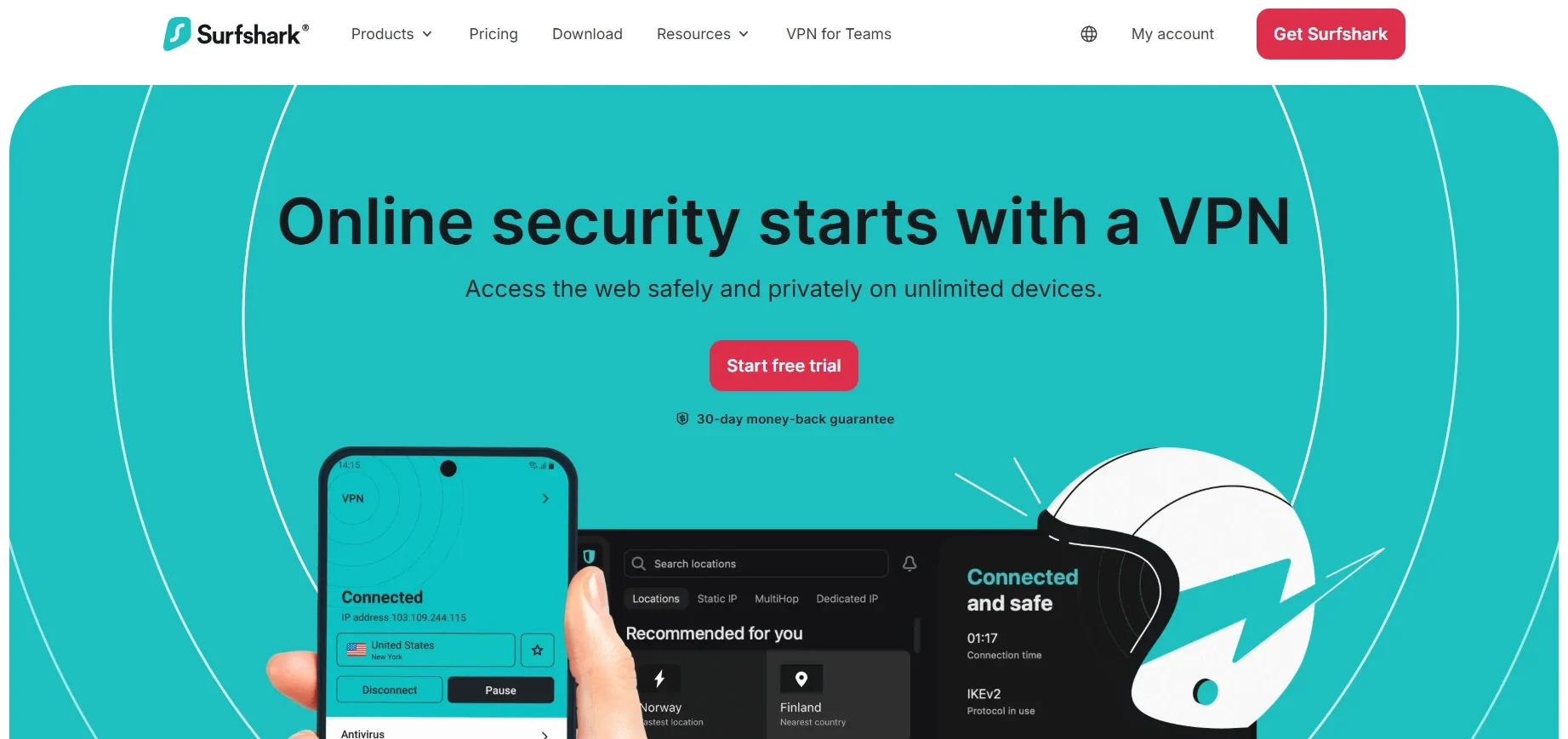
Surfshark doesn’t sell a dedicated business tier the way NordLayer or Proton VPN do. Instead, small teams often use a single Surfshark subscription because it allows unlimited simultaneous device connections, which effectively covers an entire office without buying per-seat licenses.
Pricing: Surfshark’s Starter plan runs about $2.49 per month on a 2-year term (renewing around $6.58/month), with One and One+ tiers priced higher for added antivirus and personal data removal tools. All plans include a 30-day money-back guarantee and a short free trial through mobile app stores.
Countries and servers: Surfshark operates 4,500+ servers across 100+ countries, one of the largest networks on this list.
Key features:
- Unlimited simultaneous device connections on every plan, useful for shared office equipment
- AES-256 and ChaCha20 encryption with a no-logs policy, audited by Cure53 and Deloitte
- CleanWeb ad, tracker, and malware blocking built into every tier
- Dynamic MultiHop for routing traffic through two VPN locations at once
Pros: Cheapest entry price on this list, unlimited devices per account, strong streaming and geo-unblocking performance.
Cons: No dedicated business dashboard, admin console, or centralized team billing, so it’s better suited to very small teams than growing companies. Renewal pricing jumps noticeably after the first term.
For more on securing company traffic beyond a single VPN app, see our guide to VPN concentrators.
3. ExpressVPN for Teams
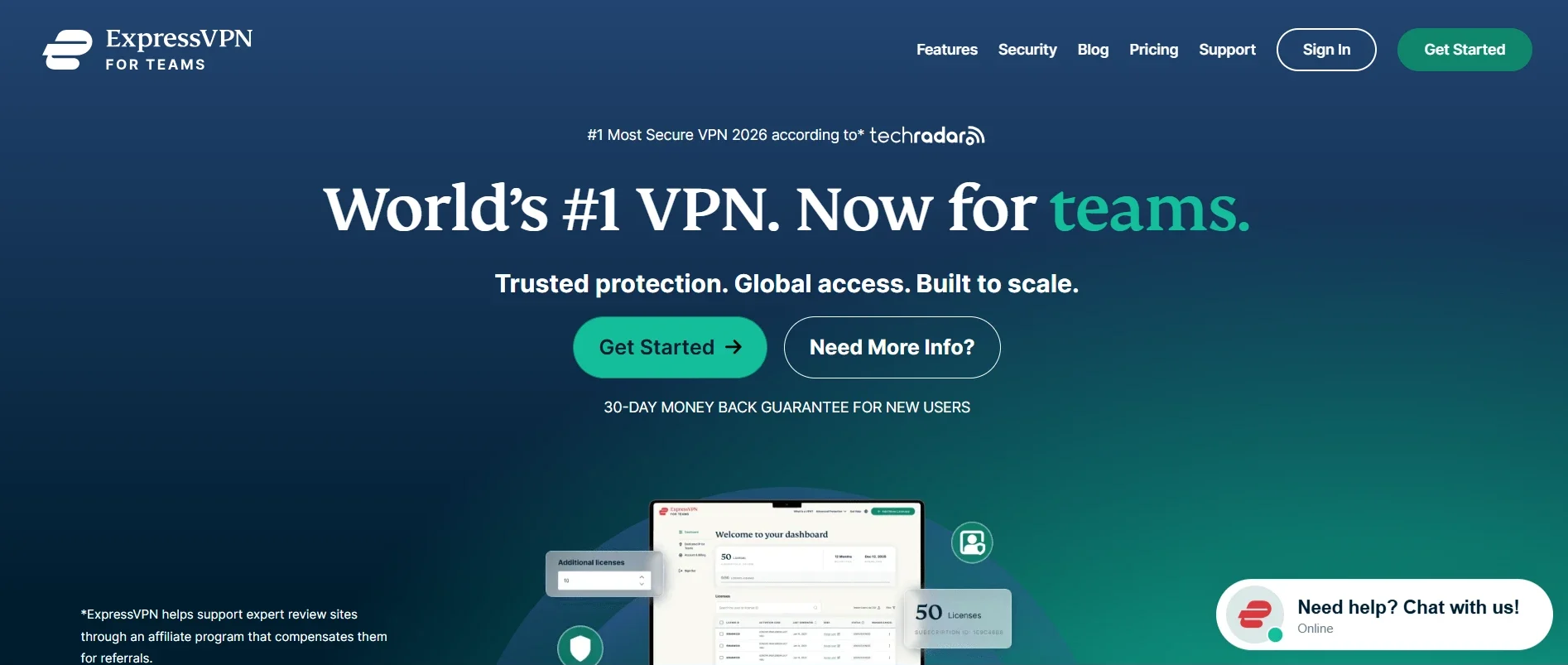
ExpressVPN launched a proper business product, ExpressVPN for Teams, in early 2026, moving beyond the consumer-plan workaround that businesses previously relied on.
Pricing: ExpressVPN for Teams uses custom, quote-based pricing with volume licensing discounts of up to 50% for larger teams, and it scales from small teams up to 500 users before requiring an enterprise quote. There’s a 30-day money-back guarantee for new accounts.
Countries and servers: ExpressVPN operates roughly 3,000+ servers across 113 countries and all 50 US states, giving it one of the widest and most geographically accurate networks in this comparison.
Key features:
- ISO 27001 compliance, relevant for companies that need to demonstrate security controls to clients or auditors
- Lightway protocol built for speed, plus RAM-only (TrustedServer) infrastructure that wipes data on every reboot
- AES-256 encryption, an automatic kill switch, and split tunneling
- 24/7 live chat support with consistently fast response times
Pros: Largest confirmed country count, strong reputation for speed and reliability, transparent no-logs auditing history on the consumer side.
Cons: No published flat per-seat price, so budgeting requires contacting sales. The Teams product is new enough that some enterprise features like SSO and MFA integrations are still catching up to competitors like NordLayer.
Choosing the right VPN protocol also affects the speed and reliability your team sees day to day, regardless of which provider you pick.
4. Proton VPN for Business
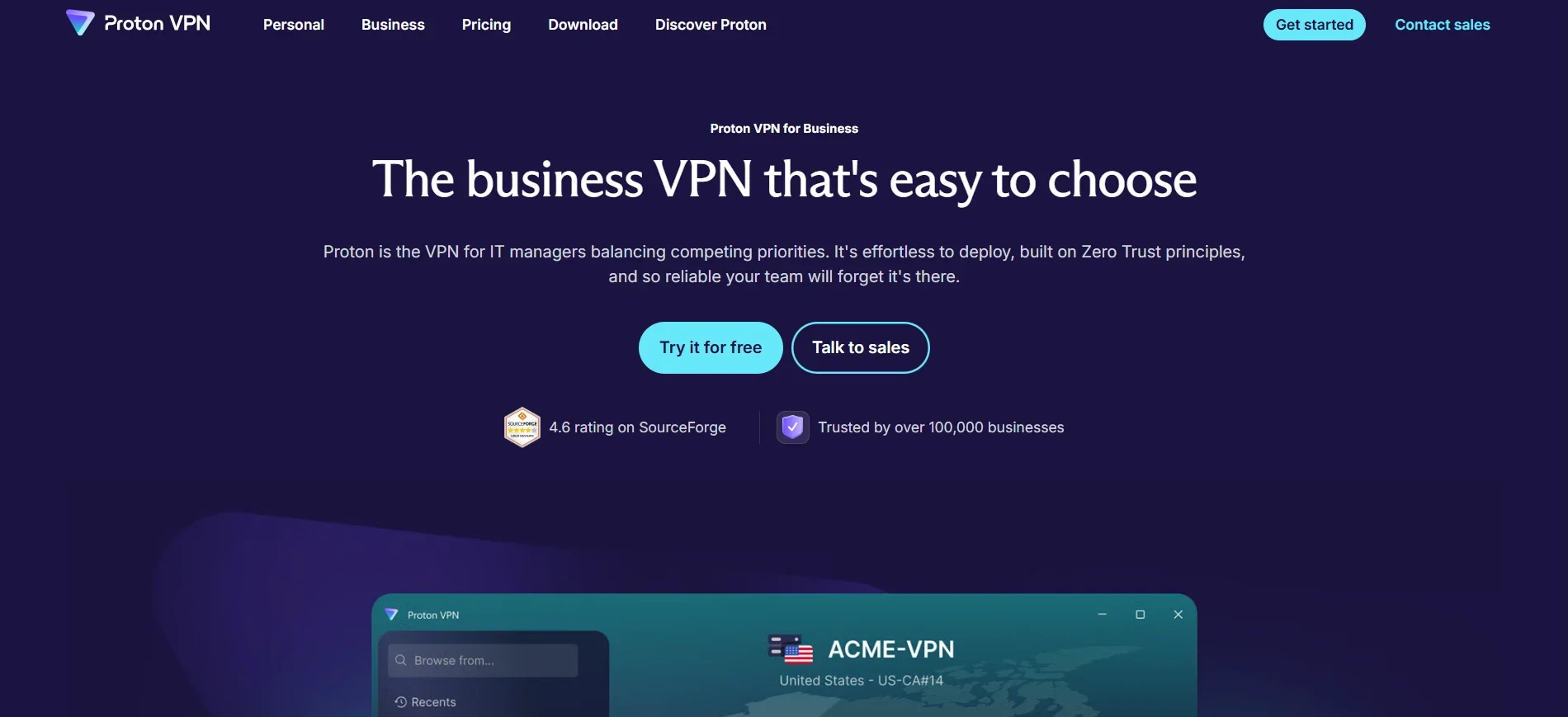
Proton VPN for Business comes from the Swiss company behind Proton Mail, and it leans heavily on that privacy-first reputation. It’s a strong fit for companies in regulated industries or anyone who wants their business traffic protected under Swiss privacy law.
Pricing: The VPN Essentials plan starts at $6.99 per user per month on an annual contract, with a VPN Professional tier available for teams that need dedicated IPs and private gateway configurations. There’s no fixed minimum team size, which makes it more accessible to very small businesses than NordLayer’s 5-seat floor.
Countries and servers: Proton VPN for Business runs on one of the largest networks available, with 15,000+ servers spanning 120+ countries.
Key features:
- Secure Core routing, which passes traffic through hardened servers in Switzerland, Iceland, or Sweden before it reaches its destination
- NetShield, a network-level ad and malware blocker that admins can configure per user
- Centralized admin controls and dedicated IPs on the Professional tier
- Fully open-source apps with independently audited no-logs practices
Pros: No minimum seat count, large and geographically diverse server network, strong compliance and audit track record.
Cons: Pricing sits above NordLayer’s entry tier, and some advanced admin tools are reserved for the higher Professional plan.
Business VPNs are just one layer of protection. For a broader look at what “business VPN” actually needs to cover, see our related business VPN resources.
5. Windscribe ScribeForce
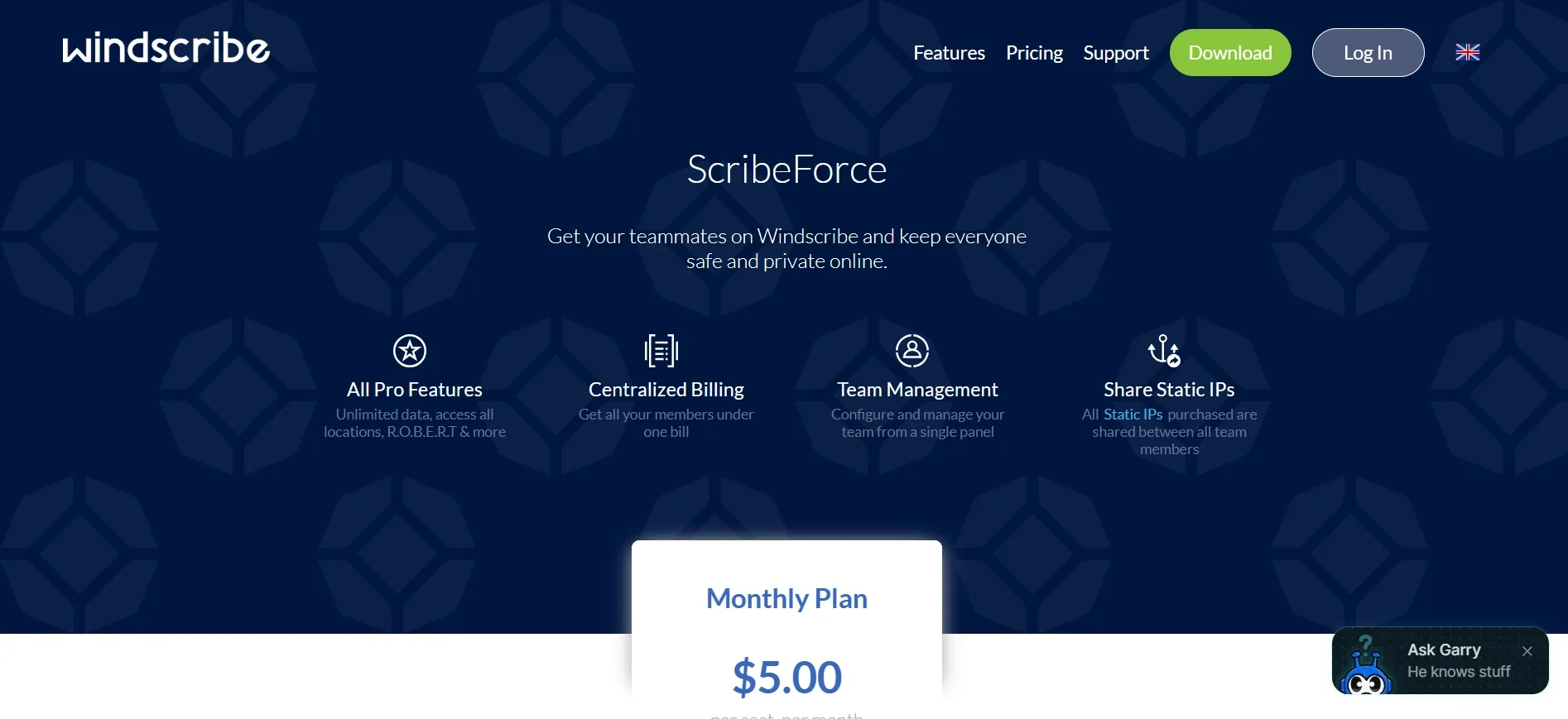
Windscribe’s business plan, ScribeForce, is built for cost-conscious small teams that don’t need the compliance features larger providers charge extra for.
Pricing: ScribeForce costs around $3 per user per month when billed annually (some sources list it up to $5/user/month depending on the promotion), with a minimum of 5 users required, undercutting every other provider on this list on a per-seat basis.
Countries and servers: The consumer Pro plan that ScribeForce is built on covers 69+ countries. Windscribe also offers a Build-A-Plan option that lets teams pay only for the specific locations they need, at roughly $1 per location per month.
Key features:
- Centralized billing and account management for teams of 5 or more
- R.O.B.E.R.T., Windscribe’s customizable DNS-level ad, tracker, and malware blocker
- Unlimited simultaneous device connections on paid plans
- Split tunneling to route only chosen apps or destinations through the VPN
Pros: Lowest per-seat price on this list, flexible Build-A-Plan option for teams that only need a handful of regions, generous 10GB free tier for testing before committing.
Cons: Smaller country count than NordLayer, Surfshark, ExpressVPN, or Proton VPN. Windscribe is based in Canada, a Five Eyes intelligence-sharing member, which may matter for privacy-sensitive industries. The refund window is a short 3 days rather than the 30-day standard elsewhere on this list.
What should you look for in a business VPN?
- Scalability. The VPN needs to add and remove users and devices easily as your headcount changes.
- Site-to-site connectivity. This lets you tunnel traffic securely between two or more office locations on the same network.
- Strong security fundamentals. Look for AES-256 encryption, a working kill switch, a no-logs policy (ideally independently audited), and support for multi-factor authentication.
- Centralized admin controls. A dashboard for managing accounts, monitoring usage, and revoking access quickly matters once you have more than a handful of employees.
- Responsive support. Choose a provider with 24/7 support that can resolve outages or lockouts without a multi-day wait.
How do business VPNs work?
When an employee connects to a business VPN, their traffic is encrypted and routed through a server controlled by the VPN provider or, in some setups, by your own company’s infrastructure. That encryption stops other people on the same network, including public Wi-Fi at a coffee shop or airport, from reading or intercepting the data.
That said, a VPN alone will not stop phishing attacks or credential theft. It protects data in transit, not the endpoints themselves. Pairing a business VPN with multi-factor authentication, a password manager, and up-to-date antivirus software gives you much more complete protection than a VPN by itself.
How to set up a business VPN
- Assess your team’s needs. Look at device count, expected data usage, remote worker locations, and any compliance requirements specific to your industry.
- Set a budget and shortlist providers. Compare per-seat pricing, minimum team sizes, and which encryption standards and protocols each provider supports.
- Pick a protocol and deployment method. Most business VPNs default to WireGuard-based protocols for speed, though OpenVPN remains an option where compatibility matters more than raw speed. See our breakdown of VPN protocols for more detail.
- Roll out to devices. Install the client on company laptops and phones, configure the admin dashboard, and set access permissions per employee or team.
FAQs
Are VPNs good for businesses?
Yes, for most companies, a business VPN is a low-cost way to add device connectivity control, remote worker security, and protection on public Wi-Fi. It won’t replace a full cybersecurity stack, but it closes one of the more common gaps for distributed teams.
Which VPN is best for a small company?
It depends on your priorities. If cost per seat matters most, Windscribe’s ScribeForce is hard to beat. If you want the widest server network and physical infrastructure, ExpressVPN for Teams or Proton VPN for Business are stronger picks. NordLayer is a solid middle ground for teams that want site-to-site connectivity without enterprise pricing.
Can VPNs protect remote workers?
A business VPN encrypts a remote employee’s connection to company systems, which reduces the risk of data interception on unsecured networks. It’s especially useful for teams with employees working from home, co-working spaces, or while traveling.
How much does a business VPN typically cost?
Per-seat pricing on this list ranges from roughly $3/user/month (Windscribe ScribeForce) to $11+/user/month for higher NordLayer tiers, with Proton VPN for Business and ExpressVPN for Teams priced in between or via custom quote. Most providers offer meaningful discounts for annual billing over monthly.
Do I need a minimum number of users to get a business VPN?
It varies by provider. NordLayer and Windscribe’s ScribeForce both require a minimum of 5 users. Surfshark and Proton VPN for Business have no stated minimum, making them more accessible for solo founders or very small teams.
Is a business VPN the same as a private network?
No. A VPN encrypts and tunnels traffic over the public internet, while a private network uses dedicated infrastructure your company owns or leases. VPNs are far cheaper and easier to set up, which is why most small and mid-sized businesses choose them over building a private network from scratch.
Conclusion
All five of these providers protect business data with strong encryption, but they solve slightly different problems. NordLayer and Proton VPN for Business lean toward companies that want dedicated admin tools and compliance-friendly infrastructure. ExpressVPN for Teams offers the broadest server footprint for globally distributed teams. Surfshark and Windscribe suit smaller, budget-conscious teams that don’t need heavy enterprise features.
Start by setting your security requirements and budget, then match them against the country coverage, minimum seat count, and admin features each provider offers above.
Related Resources:
