
Amazon datasets offer a detailed and structured view of one of the world’s largest ecommerce marketplaces. These datasets are widely used by researchers, business analysts, and developers to study product trends, customer behavior, seller performance, and pricing dynamics. They are valuable across industries for applications such as market research, machine learning, forecasting, and competitive intelligence.
An Amazon dataset typically includes product-level information, seller data, customer feedback, and historical performance indicators. To qualify as an Amazon dataset, it must contain at least one core data element, such as customer reviews, historical SKU-level pricing, or detailed product or seller attributes. The data may be numerical, textual, categorical, or multimedia, depending on the source and purpose.
What Is an Amazon Dataset
An Amazon dataset is a collection of structured or semi-structured data extracted or compiled from the Amazon marketplace. This data may include product titles, descriptions, ASINs, categories, prices, discounts, ratings, reviews, seller profiles, brand names, and availability details. Some datasets also include time-series data tracking changes in pricing rankings or review sentiment over time.
Because Amazon operates across multiple countries and categories, these datasets provide a unique opportunity to analyze global consumer behavior, product demand, and ecommerce trends at scale. Businesses use them to understand competition, optimize pricing, and plan inventory, while researchers use them to build models, study buyer sentiment, and identify market patterns.
Key Use Cases of Amazon Datasets
Machine Learning
Amazon datasets are widely used to train and evaluate machine learning models because they contain rich real-world data. Product details, reviews, ratings, and seller information support use cases such as sentiment analysis, recommendation systems, demand forecasting, and product classification. High-quality datasets reduce noise, improve feature extraction, and help models deliver more accurate predictions. This makes Amazon data valuable for both research and commercial AI applications.
Product and Pricing Intelligence
Businesses use Amazon datasets to track competitor pricing, monitor discounts, and identify top-selling products across categories. Historical pricing data helps companies understand price sensitivity and optimize dynamic pricing strategies. Product level insights, such as rankings, reviews, and availability, support better inventory planning, marketing decisions, and supply chain optimization. Accurate pricing intelligence allows companies to stay competitive while protecting profit margins.
Forecasting and Trend Analysis
Time series Amazon datasets help businesses forecast demand, analyze seasonal trends, and anticipate market changes. By studying historical sales pricing and ranking data, companies can plan production logistics and promotions more effectively. Forecasting models built on Amazon data reduce uncertainty and support data-driven decisions across operations, finance, and marketing in fast-moving ecommerce environments.
Buyer Sentiment Analysis
Customer reviews and ratings provide valuable insight into buyer sentiment and product perception. Amazon datasets allow businesses to analyze feedback trends, identify recurring issues, and understand customer preferences across regions. Sentiment analysis supports product improvement, brand reputation management, and customer experience strategies. Combined with sales data, these insights create a more complete view of marketplace performance.
Best Amazon Dataset Platform
1) Kaggle
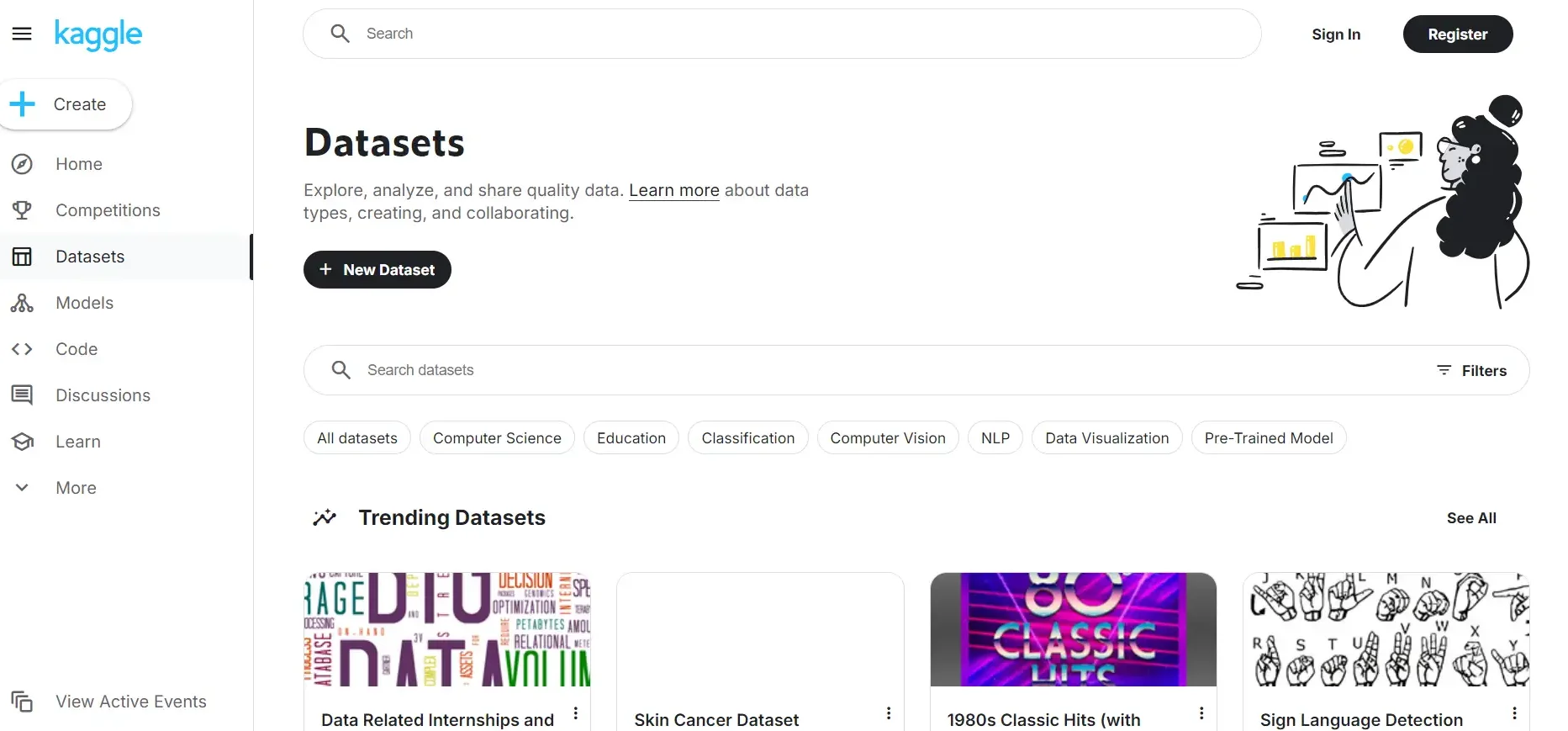
Kaggle is one of the most popular platforms for accessing publicly available Amazon datasets. It hosts thousands of datasets shared by researchers, analysts, and data enthusiasts from around the world. Amazon-related datasets on Kaggle commonly include product catalogs, customer reviews, ratings, category hierarchies, and sales-related attributes in CSV or structured formats.
One of Kaggle’s strongest advantages is its integrated environment. Users can explore Amazon datasets directly in notebooks without downloading files locally. This makes it easy to validate data quality, test machine learning models, and experiment with analysis workflows. The community aspect adds further value as users can view discussions for notebooks and learn from real use cases.
Dataset reliability on Kaggle can often be assessed through engagement metrics such as downloads, upvotes, and the number of notebooks built on top of the data. While Kaggle datasets may not always be updated in real time, they are well-suited for academic research, learning projects, proof-of-concept work, and exploratory data analysis. For students, researchers, and developers looking for accessible Amazon datasets, Kaggle remains a trusted and widely used starting point.
2) Actowiz Solutions
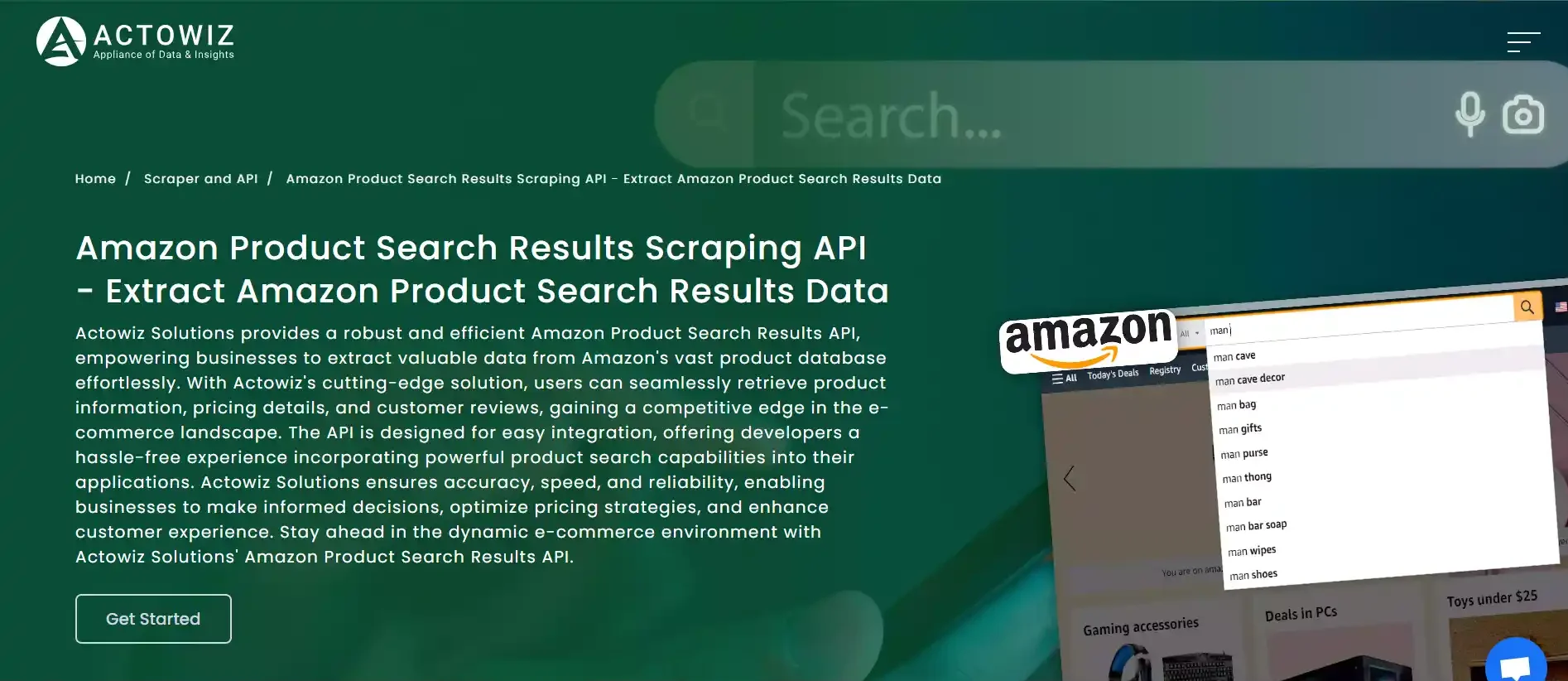
Actowiz Solutions specializes in professional Amazon data scraping and extraction services for businesses that require large-scale, customized datasets. Unlike public platforms, Actowiz focuses on delivering tailored datasets based on specific business needs, such as category tracking, seller monitoring, pricing intelligence, or bestseller analysis.
Companies use Actowiz to collect detailed Amazon product data, including prices, discounts, availability, reviews, ratings, seller details, and historical trends. These datasets help organizations understand market dynamics, optimize pricing strategies, improve product positioning, and identify emerging opportunities. Actowiz also supports data extraction across multiple Amazon regions, which is valuable for global ecommerce analysis.
One of the key strengths of Actowiz is flexibility. Businesses can request structured datasets in formats that integrate easily with internal analytics systems. This reduces data cleaning time and accelerates decision-making. Actowiz is commonly used by ecommerce brands, market research firms, and enterprises that rely on fresh, accurate data for strategic planning.
By offering scalable infrastructure and domain expertise, Actowiz enables companies to transform raw Amazon marketplace data into actionable intelligence. It is particularly suitable for organizations that need ongoing data feeds rather than one-time datasets.
3) Seller Directories

Seller Directories focus on providing verified information about online sellers rather than raw product-level data alone. Their databases include millions of ecommerce sellers across platforms such as Amazon, Shopify, WooCommerce, and direct-to-consumer brands. For Amazon-focused research, this seller-centric approach offers a different but highly valuable perspective.
The data provided by Seller Directories is often curated through human research, which improves accuracy and relevance. Information may include seller names, business details, product categories, store performance indicators, and contact data. This makes Seller Directories especially useful for sales teams, agencies, and B2B platforms looking to identify and connect with active sellers.
Unlike traditional Amazon datasets that emphasize products and reviews, Seller Directories help businesses analyze seller ecosystems, marketplace density, and vendor distribution across regions. This data supports outreach campaigns, partnership development, and market entry strategies.
Seller Directories are widely used by marketing agencies, SaaS platforms, and ecommerce service providers that need reliable seller intelligence. By focusing on seller-level insights rather than automated scraping alone, the platform delivers structured, actionable data for relationship-driven business use cases.
4) Data.world
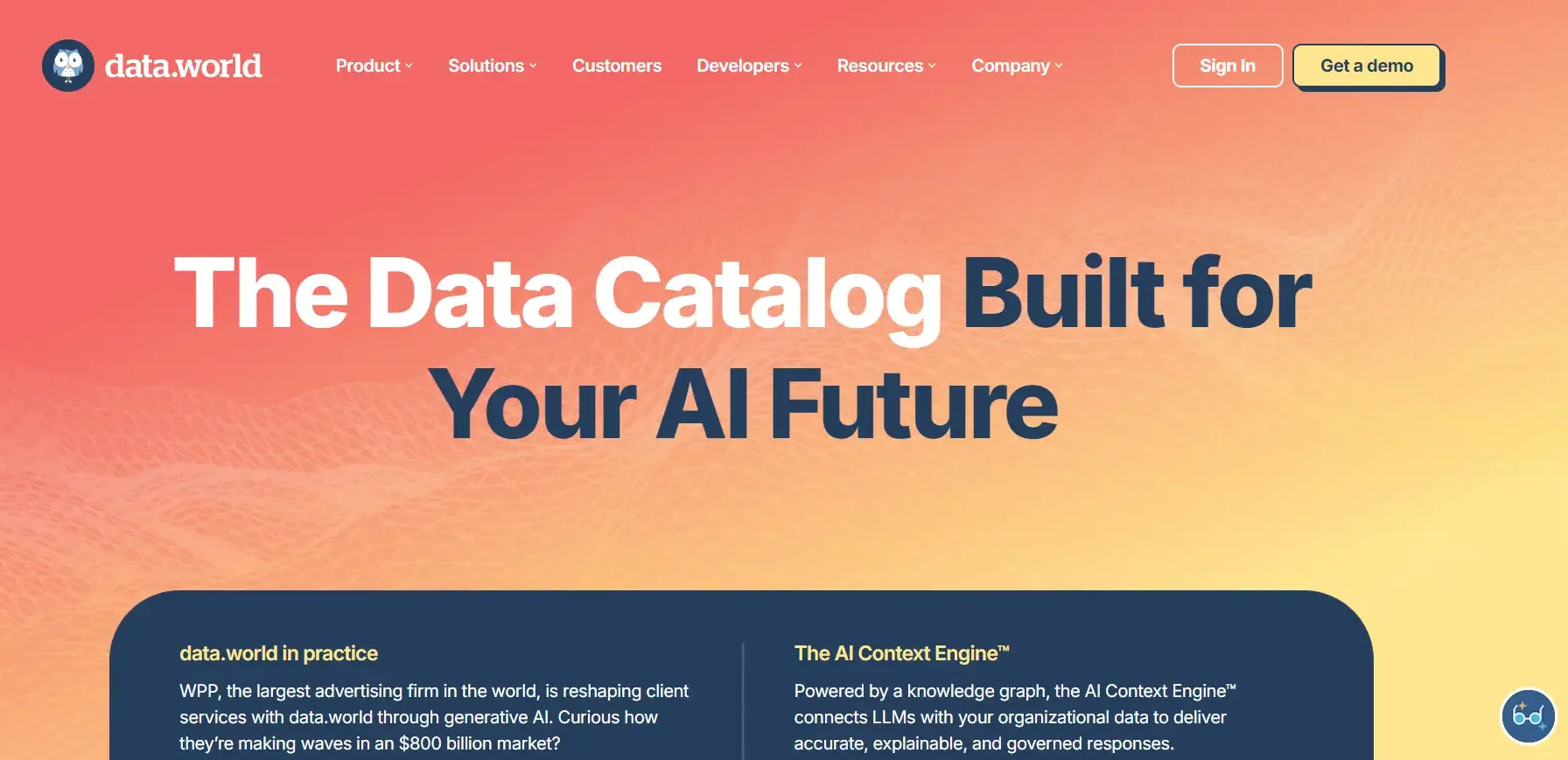
Data World is a collaborative data catalog and analytics platform that hosts a wide range of publicly shared datasets, including Amazon-related data. These datasets are contributed by individual organizations and research groups from around the world. Users can discover Amazon product review data, pricing samples, and marketplace research datasets through a searchable interface.
A major advantage of Data World is its emphasis on documentation, metadata, and collaboration. Each dataset typically includes descriptions, schema details, and usage context, which helps analysts understand the data before applying it. Teams can also combine Amazon datasets with internal data sources to create reusable analytics models.
Data World supports SQL-based queries and data exploration without requiring downloads, which makes it suitable for enterprise research environments. Governance and version control features help maintain data consistency across teams.
This platform is ideal for analysts, researchers, and organizations that value transparency, collaboration, and reproducibility. While Data World may not always provide real-time Amazon data, it excels in structured analysis, long-term research projects, and shared data workflows.
5 Bright Data
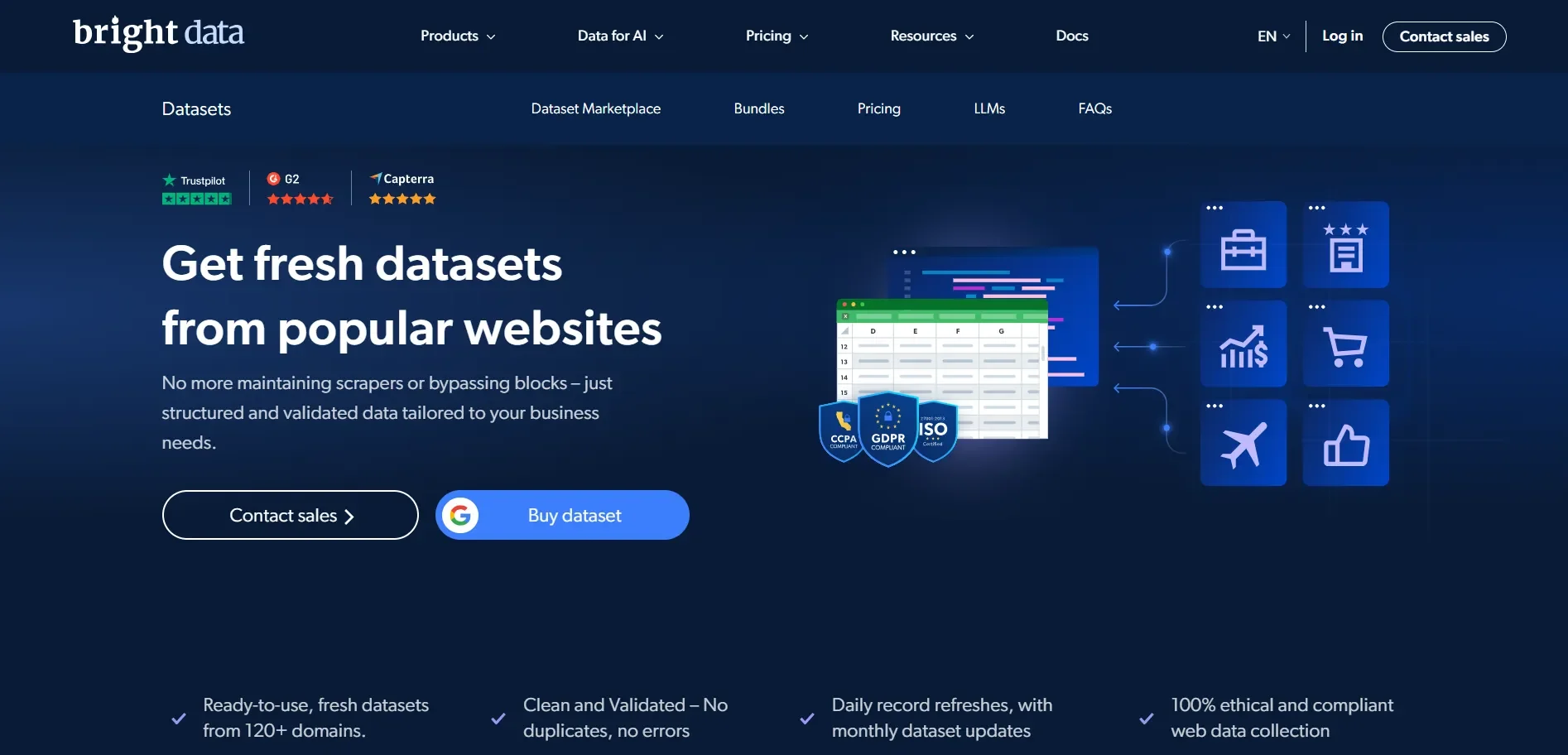
Bright Data is an enterprise-grade platform designed for large-scale web data collection, including Amazon marketplace data. It provides advanced tools that allow businesses to gather product information, pricing trends, customer reviews, and seller data with high accuracy and consistency. Bright Data is widely trusted by global enterprises for market intelligence and analytics.
The platform is built to support continuous data collection, which is essential for price monitoring, demand tracking, and competitive analysis. Businesses can collect structured datasets that integrate seamlessly with machine learning pipelines and analytics platforms. Bright Data also supports global data coverage across multiple Amazon marketplaces.
One of the key advantages of Bright Data is reliability at scale. Its infrastructure is designed to handle large volumes of requests while maintaining data freshness and compliance. This makes it suitable for AI-driven applications, brand protection use cases, and real-time market monitoring.
Bright Data is commonly used by ecommerce brands, financial institutions, research firms, and technology companies that require accurate, up-to-date Amazon datasets. It is best suited for organizations that depend on ongoing data streams rather than static datasets.
Amazon’s Most Popular Datasets
Dataset of Reviews from Amazon
The Amazon reviews dataset contains detailed customer feedback data that helps businesses and researchers understand buyer opinions at scale. It typically includes reviewer identifiers, review IDs, ratings, review counts, ASINs, product names, URLs, and timestamps. This dataset is widely used for sentiment analysis quality assessment and consumer behavior studies. By analyzing review trends, companies can identify product strengths and weaknesses, as well as shifts in customer expectations across categories and regions.
Dataset of Amazon’s Best Sellers
The Amazon best sellers dataset focuses on products that perform strongly across various categories. It includes key attributes such as product descriptions, prices, seller information, ratings, reviews, brand names, and category rankings. Businesses use this dataset to identify high-demand products, monitor competitive positioning, and analyze what drives top performance. It is especially valuable for trend discovery, product research, and understanding which features and pricing strategies influence bestseller status.
Amazon Product Dataset
The Amazon product dataset provides a comprehensive view of product listings available on the marketplace. It commonly includes seller details, ASINs, pricing discounts, ratings, descriptions, and category information. This dataset supports product comparison, market research, and inventory planning. Businesses and analysts use it to track listing changes, evaluate pricing strategies, and analyze competition across categories and regions.
Applications of Amazon datasets by businesses
Reputation and Customer Sentiment
Amazon data helps businesses analyze customer review ratings and buying behavior to understand brand reputation and product popularity across countries. By tracking demand patterns and sentiment trends, companies can identify which categories and brands are performing well in specific regions. These insights support better product positioning, reputation management, and market expansion decisions.
Product Inventory and Pricing Strategy
By studying frequently searched and purchased products on Amazon, businesses can identify high-demand items and seasonal trends. This data enables companies to optimize inventory levels, adjust pricing strategies, and streamline supply chain operations. Accurate demand insights also improve marketing effectiveness and reduce risks related to overstocking or shortages.
Outranking the Competition
Amazon datasets reveal what drives success for top-performing sellers, including pricing tactics, product features, promotions, and customer feedback. Businesses can analyze competitor listings, reviews, and sales patterns to uncover winning strategies. These insights help attract top sellers, develop competitive offerings, and discover new opportunities for growth and differentiation.
Frequently Asked Questions
What information does the Amazon dataset contain?
Amazon datasets include detailed information such as seller IDs, names, ratings, reviews, product titles, brands, ASINs, categories, prices, discounts, availability, and listing descriptions. Depending on the source, datasets may also contain historical pricing review timestamps, seller locations, and performance indicators used for analysis and research.
Where does Amazon obtain its data?
Amazon collects data through its internal marketplace systems by tracking product listings, searches, clicks, purchases, cart activity, and customer interactions. It also analyzes seller activity, pricing updates, and review submissions to generate detailed insights that support marketplace operations and data-driven decision-making.
Are these datasets updated frequently?
Dataset update frequency depends on the data provider and use case. Some Amazon datasets are refreshed daily for price and availability tracking, while others update weekly, monthly, or on demand. Custom update schedules are often available through professional data service providers.
Can Amazon datasets be used for academic research?
Yes, Amazon datasets are widely used in academic research for studying consumer behavior, pricing dynamics, recommendation systems, and sentiment analysis. Public datasets from platforms like Kaggle and Data World are especially popular for research projects and experimentation.
Are Amazon datasets suitable for large-scale business analysis?
Amazon datasets are well-suited for large-scale business analysis when sourced from reliable providers. They support competitive intelligence, market forecasting, inventory planning, and machine learning applications across multiple regions and product categories.
Conclusion
Amazon datasets play a crucial role in modern data-driven decision-making. They support research, machine learning, business intelligence, and strategic planning across industries. Whether sourced from public platforms or enterprise data providers, these datasets unlock valuable insights into consumer behavior, product performance, and ecommerce trends. As the Amazon marketplace continues to grow, the importance of high-quality Amazon datasets will only increase.
More on Dataset:
